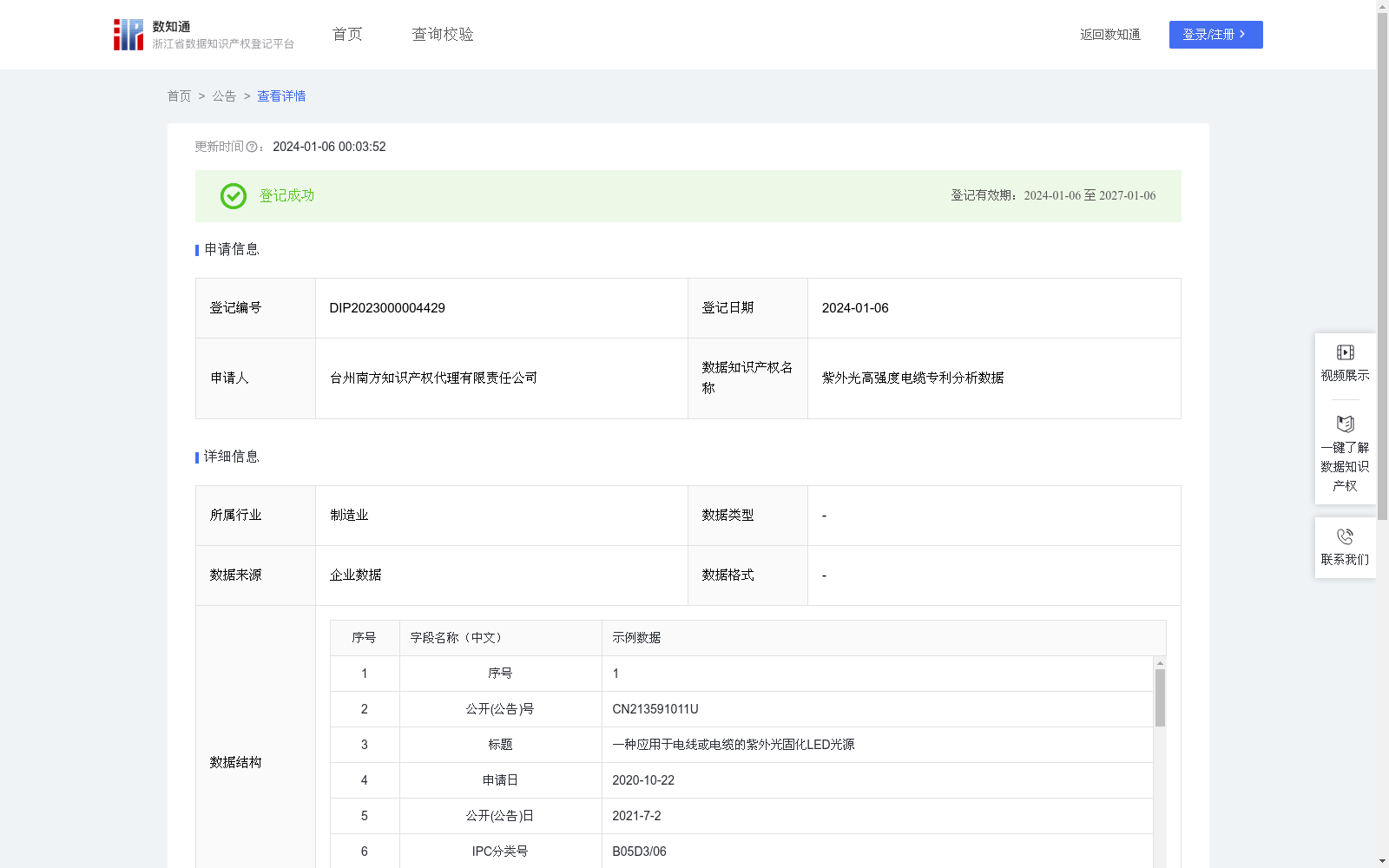
紫外光高强度电缆专利分析数据
收藏资源简介:
紫外光高强度电缆专利分析数据主要包括了全球专利数据库中有关紫外光高强度电缆的专利数据,并根据自有算法对专利数据进行了统计,确认重点专利,可用于横向、纵向了解紫外光高强度电缆全球专利数据的变化情况和技术发展趋势,了解各国和各地区企业/个人的技术创新能力、创新水平差异,为企业提供研发合作、技术引进或输出建议。1、采用统计学模型排序、聚类的方法,对专利数据的著录项目进行统计。包括以下:1.数据来源:全球专利数据库;2.数据采集:根据专利的IPC分类号和关键字段,筛选全球专利数据库中的紫外光高强度电缆相关专利,记录著录项目信息,形成紫外光高强度电缆的专利数据库;3.重点专利筛选:专利的重点程度定义由被引用专利数量和简单同族数量确定,即专利重点程度Y=X1+X2,其中X1表示被引用专利数量,X2表示简单同族数量;确认每个专利的重点程度之后,取重点程度值大小排序在前20的专利作为重点专利,标注为是,反之标注为否,具体采用了IF、RANK的组合函数。
Patent analysis data for high-strength ultraviolet (UV) cables mainly includes patent data related to high-strength UV cables from global patent databases. Proprietary algorithms are used to process and analyze the patent data and identify key patents. This dataset can be used to gain cross-sectional and longitudinal insights into the changes in global patent data for high-strength UV cables and their technological development trends, as well as the differences in technological innovation capabilities and innovation levels among enterprises and individuals across countries and regions, providing enterprises with recommendations for R&D cooperation, technology introduction, or technology output. 1. Statistical model-based sorting and clustering methods are adopted to analyze the bibliographic records of patent data, including the following contents: 1. Data Source: Global patent databases; 2. Data Collection: Screen patents related to high-strength UV cables from global patent databases based on their IPC classification numbers and key fields, record their bibliographic information, and establish a dedicated patent database for high-strength UV cables; 3. Key Patent Screening: The importance level of a patent is defined by the number of cited patents and the number of simple patent families, i.e., the patent importance level Y = X1 + X2, where X1 represents the number of cited patents and X2 represents the number of simple patent families. After confirming the importance level of each patent, the top 20 patents ranked by their importance level values are selected as key patents and marked as "Yes", while the remaining patents are marked as "No". Specifically, a combined function of IF and RANK is employed for this process.