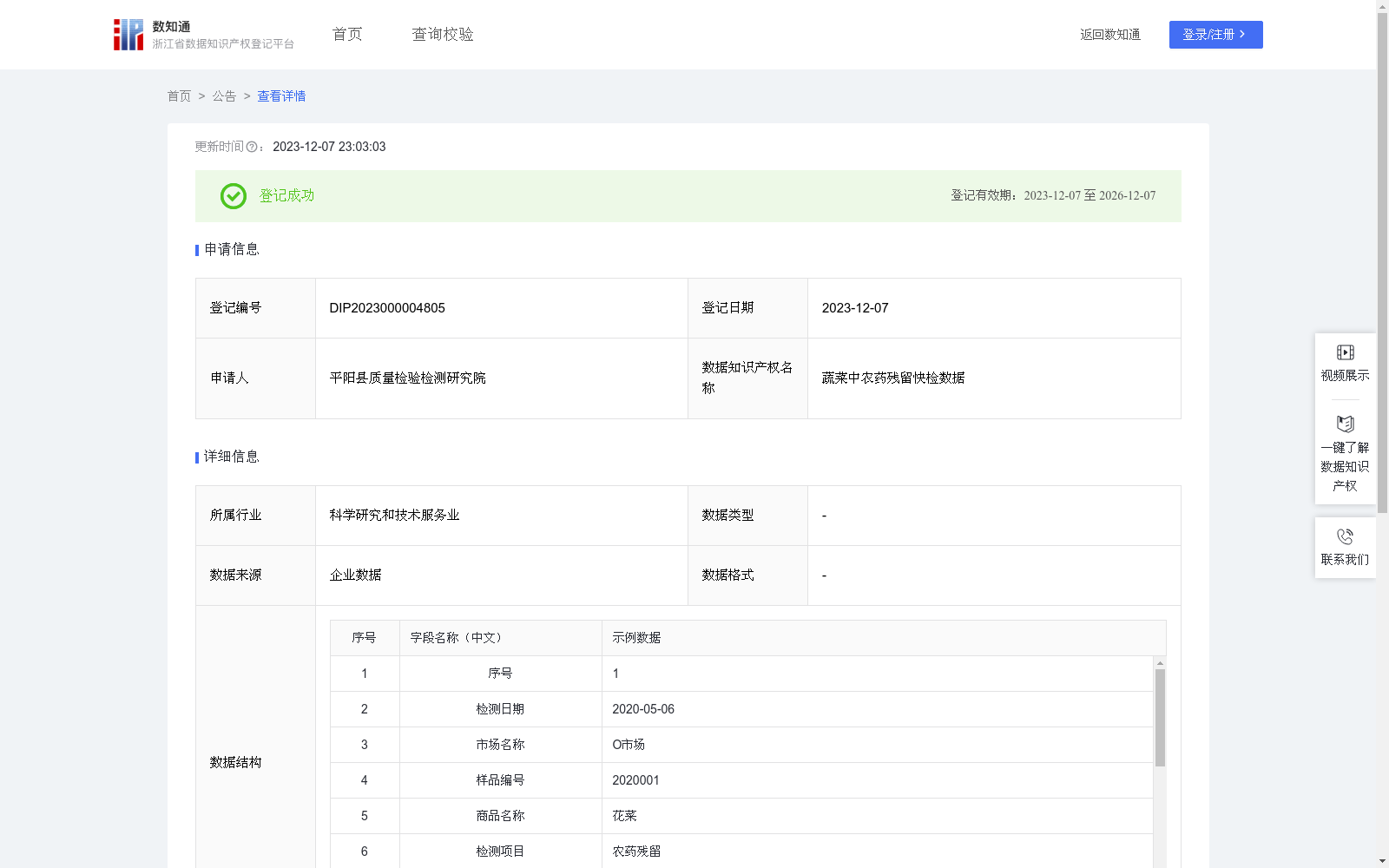
蔬菜中农药残留快检数据
收藏资源简介:
对平阳县农贸市场流通领域中蔬菜开展快检,对蔬菜开展农药残留项目检测,从而为合格率评价提供事实依据,为政府监管、消费者购买提供参考和技术支撑。1.数据采集:在全县范围内的农贸市场随机抽取蔬菜,对其农药残留展开分析调查。2.数据检测:采用NY/T761—2008《蔬菜和蔬菜中有机磷、有机氯、拟除虫菊酯和氨基甲酸酯类农药多残留的测定》标准,对蔬菜开展农药残留项目检测获得相关数据。3.数据处理:筛选出农药残留问题项检测结果,进行不合格率的评估。全部样品不合格率=全部样品不合格数/全部样品总数;具体类别样品不合格率(如:花菜不合格率)=具体类别样品不合格数/具体类别样品总数。通过对全部样品不合格率的分析,了解蔬菜中农药残留现状,通过对不同样品的不合格率的分析,了解哪些商品的不合格率比较高,为消费者的健康饮食提供数据参考,也为后续工作中确定需要重点检测对象提供指导。
Rapid on-site testing of vegetables in the circulation sector of agricultural markets in Pingyang County is conducted, focusing on pesticide residue detection for sampled vegetables. This work provides factual basis for qualification rate evaluation, as well as references and technical support for government supervision and consumer purchasing decisions. 1. Data Collection: Randomly sample vegetables from agricultural markets across the entire county, and conduct analytical surveys on their pesticide residues. 2. Data Detection: Adopt the standard NY/T 761-2008 *Standard for the Determination of Multiresidual Organophosphorus, Organochlorine, Pyrethroid and Carbamate Pesticides in Vegetables* to perform pesticide residue tests on the sampled vegetables, thereby acquiring relevant detection data. 3. Data Processing: Screen out the test results of pesticide residue-related items, and evaluate the unqualified rates. The unqualified rate of all samples is calculated as: number of unqualified samples / total number of all samples; The unqualified rate of specific category samples (e.g., unqualified rate of cauliflower) is calculated as: number of unqualified samples in the specific category / total number of samples in the specific category. By analyzing the unqualified rate of all samples, the current status of pesticide residues in local vegetables can be clarified. By comparing the unqualified rates of different sample categories, commodities with relatively high unqualified rates can be identified. This dataset provides data references for consumers to make healthy dietary choices, and offers guidance for determining key detection targets in subsequent regulatory work.