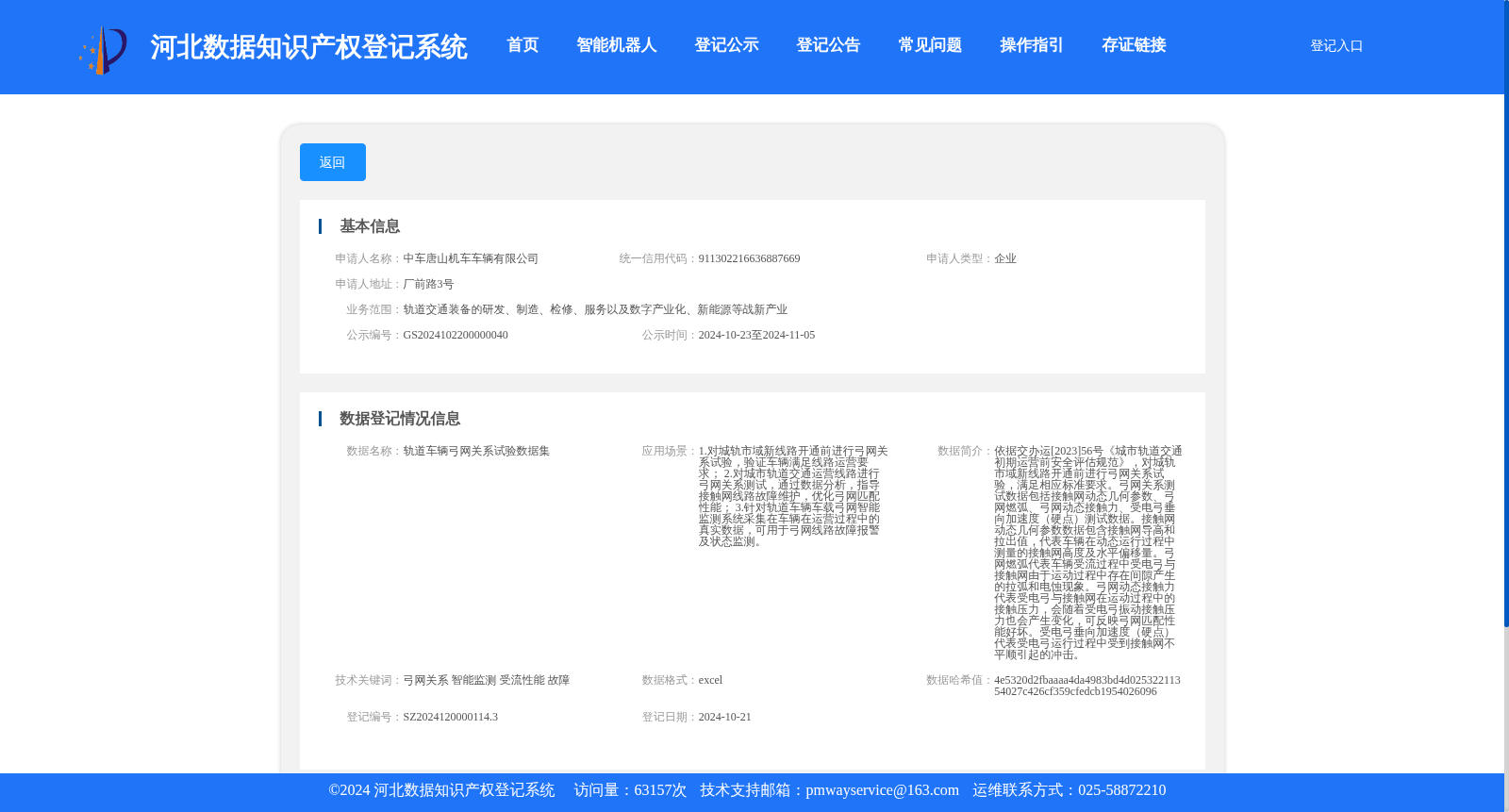
轨道车辆弓网关系试验数据集
收藏资源简介:
依据交办运[2023]56号《城市轨道交通初期运营前安全评估规范》,对城轨市域新线路开通前进行弓网关系试验,满足相应标准要求。弓网关系测试数据包括接触网动态几何参数、弓网燃弧、弓网动态接触力、受电弓垂向加速度(硬点)测试数据。接触网动态几何参数数据包含接触网导高和拉出值,代表车辆在动态运行过程中测量的接触网高度及水平偏移量。弓网燃弧代表车辆受流过程中受电弓与接触网由于运动过程中存在间隙产生的拉弧和电蚀现象。弓网动态接触力代表受电弓与接触网在运动过程中的接触压力,会随着受电弓振动接触压力也会产生变化,可反映弓网匹配性能好坏。受电弓垂向加速度(硬点)代表受电弓运行过程中受到接触网不平顺引起的冲击。
Pursuant to Jiaobanyun [2023] No.56 *Specification for Safety Assessment Before Initial Operation of Urban Rail Transit*, pantograph-catenary relationship tests shall be conducted on newly-built urban and suburban rail transit lines prior to their opening to traffic to meet the corresponding standard requirements. The pantograph-catenary relationship test data includes dynamic geometric parameters of the catenary, pantograph-catenary arcing, dynamic pantograph-catenary contact force, and vertical acceleration (hard point) test data of the pantograph. The dynamic geometric parameters of the catenary include catenary height and stagger of catenary wire, which represent the catenary height and horizontal offset measured during the dynamic operation of trains. Pantograph-catenary arcing refers to the arcing and electric erosion phenomena generated between the pantograph and catenary due to gaps present during their movement when the train collects current. Dynamic pantograph-catenary contact force represents the contact pressure between the pantograph and catenary during movement; the contact pressure varies with the vibration of the pantograph, which can reflect the matching performance of the pantograph-catenary system. The vertical acceleration (hard point) of the pantograph represents the impact sustained by the pantograph during its operation caused by catenary irregularities.