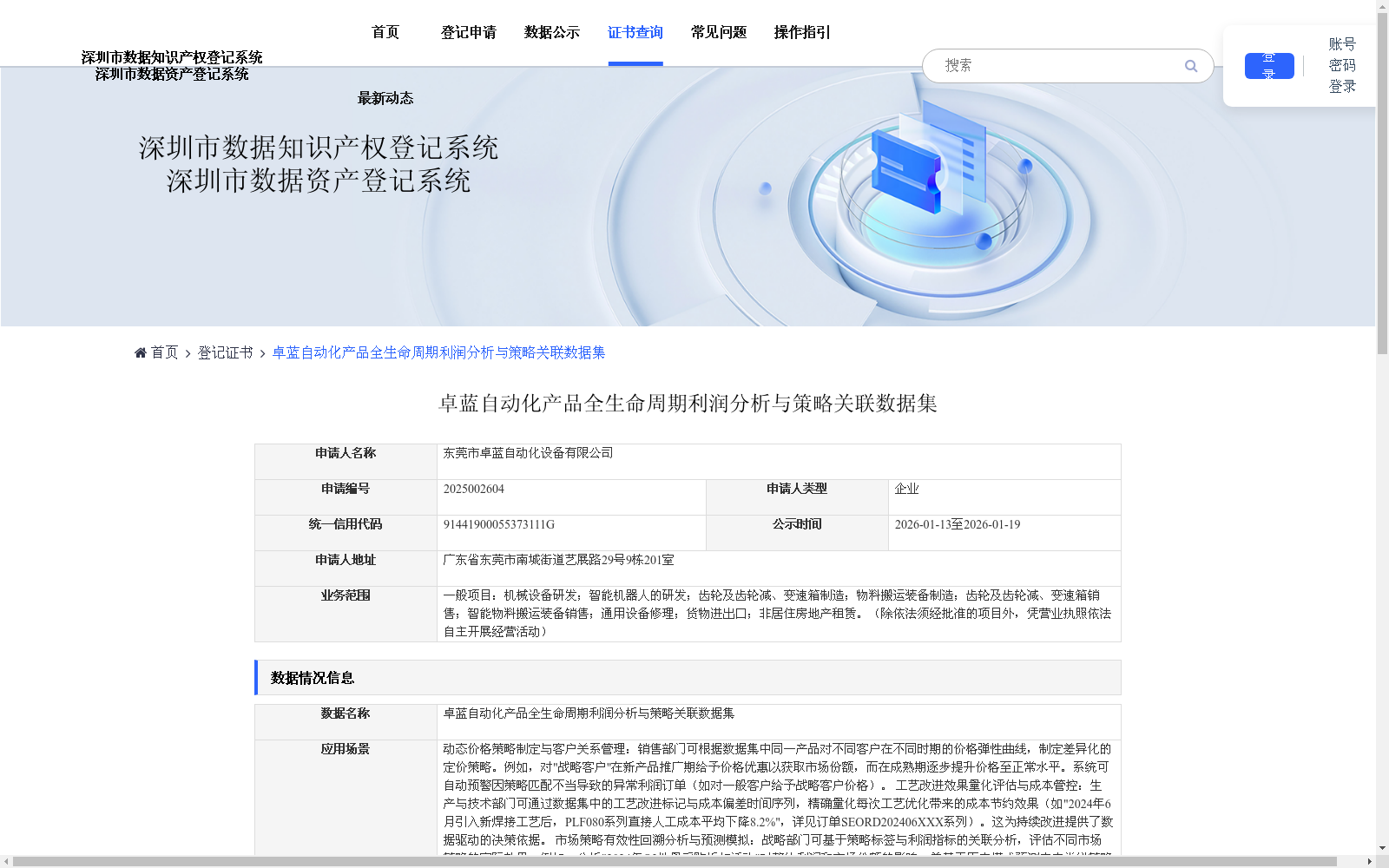
卓蓝自动化产品全生命周期利润分析与策略关联数据集
收藏资源简介:
动态价格策略制定与客户关系管理:销售部门可根据数据集中同一产品对不同客户在不同时期的价格弹性曲线,制定差异化的定价策略。例如,对"战略客户"在新产品推广期给予价格优惠以获取市场份额,而在成熟期逐步提升价格至正常水平。系统可自动预警因策略匹配不当导致的异常利润订单(如对一般客户给予战略客户价格)。 工艺改进效果量化评估与成本管控:生产与技术部门可通过数据集中的工艺改进标记与成本偏差时间序列,精确量化每次工艺优化带来的成本节约效果(如"2024年6月引入新焊接工艺后,PLF080系列直接人工成本平均下降8.2%",详见订单SEORD202406XXX系列)。这为持续改进提供了数据驱动的决策依据。 市场策略有效性回溯分析与预测模拟:战略部门可基于策略标签与利润指标的关联分析,评估不同市场策略的实际效果。例如,分析"2024年Q3批量采购折扣活动"对整体利润和市场份额的影响,并基于历史模式预测未来类似策略的可能结果,实现"策略-执行-评估-优化"的闭环管理。
Dynamic Pricing Strategy Formulation and Customer Relationship Management: The sales department can develop differentiated pricing strategies based on the price elasticity curves of the same product across different customers and time periods in the dataset. For example, offer price discounts to "strategic customers" during the new product launch phase to gain market share, and gradually raise prices to normal levels during the maturity stage. The system can automatically alert to abnormal profit orders caused by mismatched pricing strategies (such as applying strategic customer prices to regular customers). Process Improvement Effect Quantitative Evaluation and Cost Control: The production and technical departments can accurately quantify the cost savings brought by each process optimization through the process improvement markers and time series of cost deviations in the dataset. For example, "After introducing the new welding process in June 2024, the average direct labor cost of the PLF080 series decreased by 8.2%", see order series SEORD202406XXX for details. This provides data-driven decision-making basis for continuous improvement. Market Strategy Effectiveness Retrospective Analysis and Prediction Simulation: The strategic department can evaluate the actual effectiveness of different market strategies based on the correlation analysis between strategy tags and profit indicators. For example, analyze the impact of the "Q3 2024 bulk purchase discount campaign" on overall profit and market share, and predict the possible outcomes of future similar strategies based on historical patterns, realizing closed-loop management of "strategy-execution-evaluation-optimization".