订单商品数量--实发数量差异数据集
收藏资源简介:
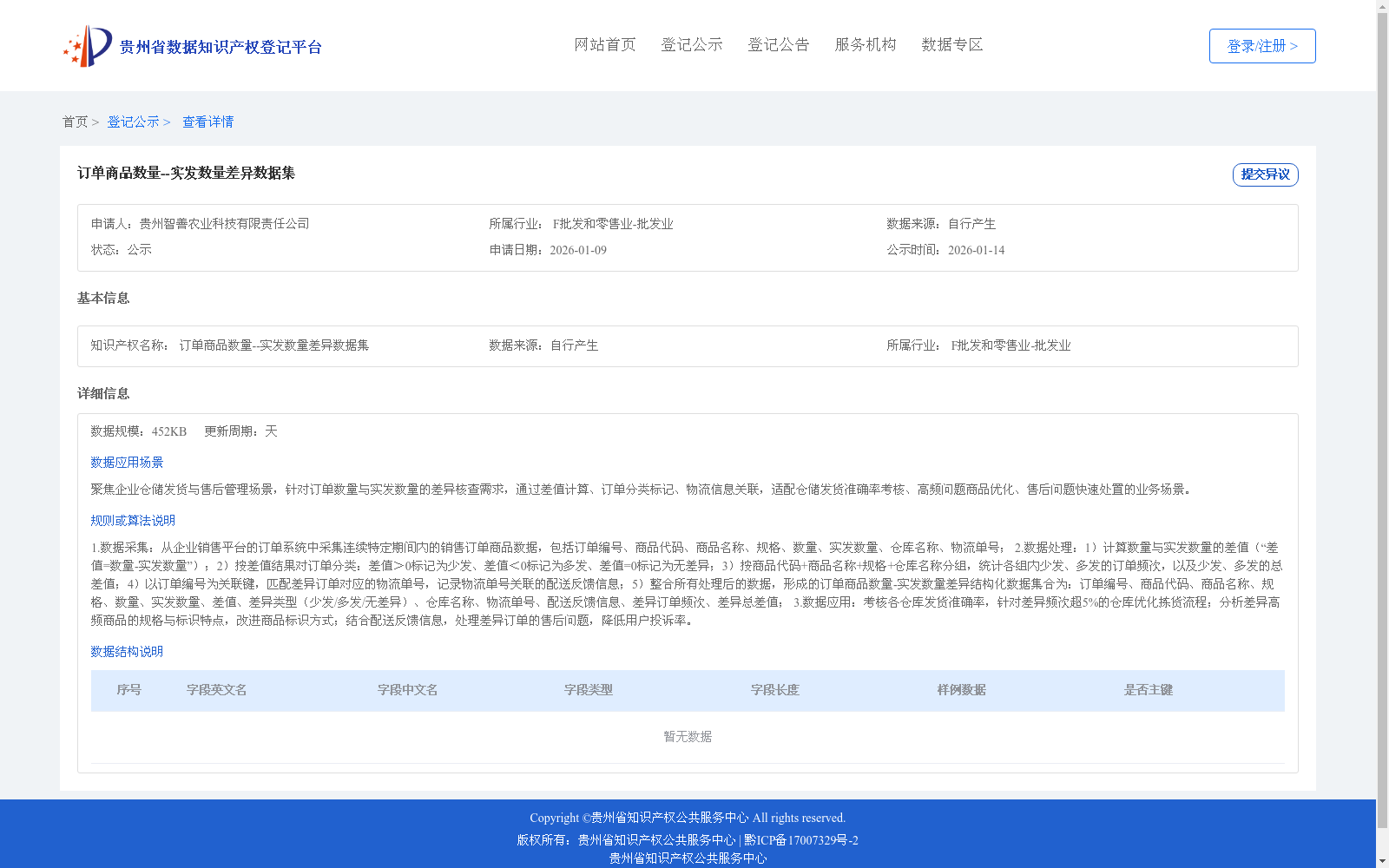
1.数据采集:从企业销售平台的订单系统中采集连续特定期间内的销售订单商品数据,包括订单编号、商品代码、商品名称、规格、数量、实发数量、仓库名称、物流单号; 2.数据处理:1)计算数量与实发数量的差值(“差值=数量-实发数量”);2)按差值结果对订单分类:差值>0标记为少发、差值<0标记为多发、差值=0标记为无差异;3)按商品代码+商品名称+规格+仓库名称分组,统计各组内少发、多发的订单频次,以及少发、多发的总差值;4)以订单编号为关联键,匹配差异订单对应的物流单号,记录物流单号关联的配送反馈信息;5)整合所有处理后的数据,形成的订单商品数量-实发数量差异结构化数据集合为:订单编号、商品代码、商品名称、规格、数量、实发数量、差值、差异类型(少发/多发/无差异)、仓库名称、物流单号、配送反馈信息、差异订单频次、差异总差值; 3.数据应用:考核各仓库发货准确率,针对差异频次超5%的仓库优化拣货流程;分析差异高频商品的规格与标识特点,改进商品标识方式;结合配送反馈信息,处理差异订单的售后问题,降低用户投诉率。
1. Data Collection: Collect sales order item data within a specific continuous period from the order system of the enterprise sales platform, including order number, product code, product name, specification, quantity, actual shipped quantity, warehouse name, and logistics tracking number. 2. Data Processing: 1) Calculate the difference between quantity and actual shipped quantity, defined as "Difference = Quantity - Actual Shipped Quantity"; 2) Classify orders based on the calculated difference: label orders with a positive difference as "Under-shipped", those with a negative difference as "Over-shipped", and those with a zero difference as "No Difference"; 3) Group the data by product code, product name, specification, and warehouse name, then tally the order frequencies of under-shipped and over-shipped instances within each group, as well as the total difference sums for under-shipped and over-shipped scenarios; 4) Use order number as the join key to match the logistics tracking number corresponding to the discrepancy orders, and record the delivery feedback information associated with the logistics tracking number; 5) Integrate all processed data to form a structured dataset for order item quantity vs. actual shipped quantity discrepancies, which includes the following fields: order number, product code, product name, specification, quantity, actual shipped quantity, difference, discrepancy type (under-shipped/over-shipped/no difference), warehouse name, logistics tracking number, delivery feedback information, discrepancy order frequency, and total discrepancy value. 3. Data Application: Evaluate the shipping accuracy of each warehouse, and optimize the picking process for warehouses with a discrepancy frequency exceeding 5%; analyze the specification and identification characteristics of high-frequency discrepancy products to improve product identification methods; combine delivery feedback information to handle after-sales issues of discrepancy orders and reduce user complaint rates.