Mechanism and Reversal of Nephrotoxicity on a Chip
收藏资源简介:
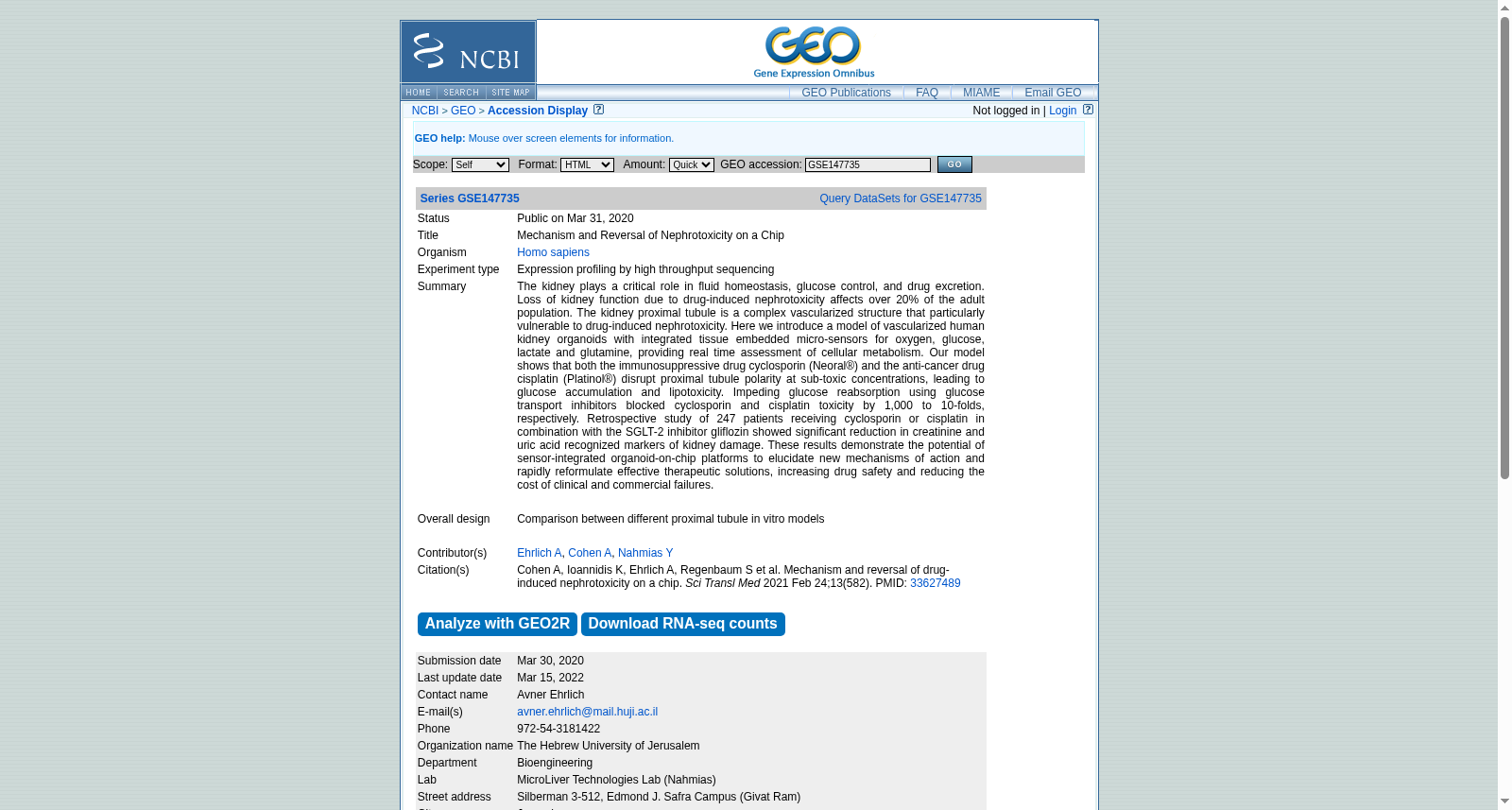
The kidney plays a critical role in fluid homeostasis, glucose control, and drug excretion. Loss of kidney function due to drug-induced nephrotoxicity affects over 20% of the adult population. The kidney proximal tubule is a complex vascularized structure that particularly vulnerable to drug-induced nephrotoxicity. Here we introduce a model of vascularized human kidney organoids with integrated tissue embedded micro-sensors for oxygen, glucose, lactate and glutamine, providing real time assessment of cellular metabolism. Our model shows that both the immunosuppressive drug cyclosporin (Neoral®) and the anti-cancer drug cisplatin (Platinol®) disrupt proximal tubule polarity at sub-toxic concentrations, leading to glucose accumulation and lipotoxicity. Impeding glucose reabsorption using glucose transport inhibitors blocked cyclosporin and cisplatin toxicity by 1,000 to 10-folds, respectively. Retrospective study of 247 patients receiving cyclosporin or cisplatin in combination with the SGLT-2 inhibitor gliflozin showed significant reduction in creatinine and uric acid recognized markers of kidney damage. These results demonstrate the potential of sensor-integrated organoid-on-chip platforms to elucidate new mechanisms of action and rapidly reformulate effective therapeutic solutions, increasing drug safety and reducing the cost of clinical and commercial failures. Comparison between different proximal tubule in vitro models
肾脏在体液稳态、血糖调控与药物排泄中发挥关键作用。药物性肾毒性导致的肾功能丧失,影响了超过20%的成年人群。肾近端小管是一类复杂的血管化结构,尤其易受药物性肾毒性损伤。本研究介绍了一种集成可嵌入组织的氧、葡萄糖、乳酸及谷氨酰胺微传感器的血管化人类肾脏类器官(kidney organoids)模型,可实现细胞代谢的实时评估。研究结果显示,免疫抑制药物环孢素(cyclosporin,商品名Neoral®)与抗癌药物顺铂(cisplatin,商品名Platinol®)在亚毒性浓度下即可破坏近端小管的细胞极性,进而引发葡萄糖蓄积与脂毒性。使用葡萄糖转运抑制剂阻断葡萄糖重吸收,可分别将环孢素与顺铂的毒性降低1000倍与10倍。对247名接受环孢素或顺铂联合钠-葡萄糖协同转运蛋白2(SGLT-2)抑制剂格列净(gliflozin)类药物治疗的患者开展回顾性研究发现,作为肾损伤公认标志物的肌酐与尿酸水平显著降低。上述结果证实,集成传感器的芯片上类器官(organoid-on-chip)平台有望阐明全新的药物作用机制,并快速优化有效治疗方案,从而提升药物安全性,降低临床与商业失败的成本。不同体外近端小管模型的比较。