精炼车间关键工序监测数据集
收藏资源简介:
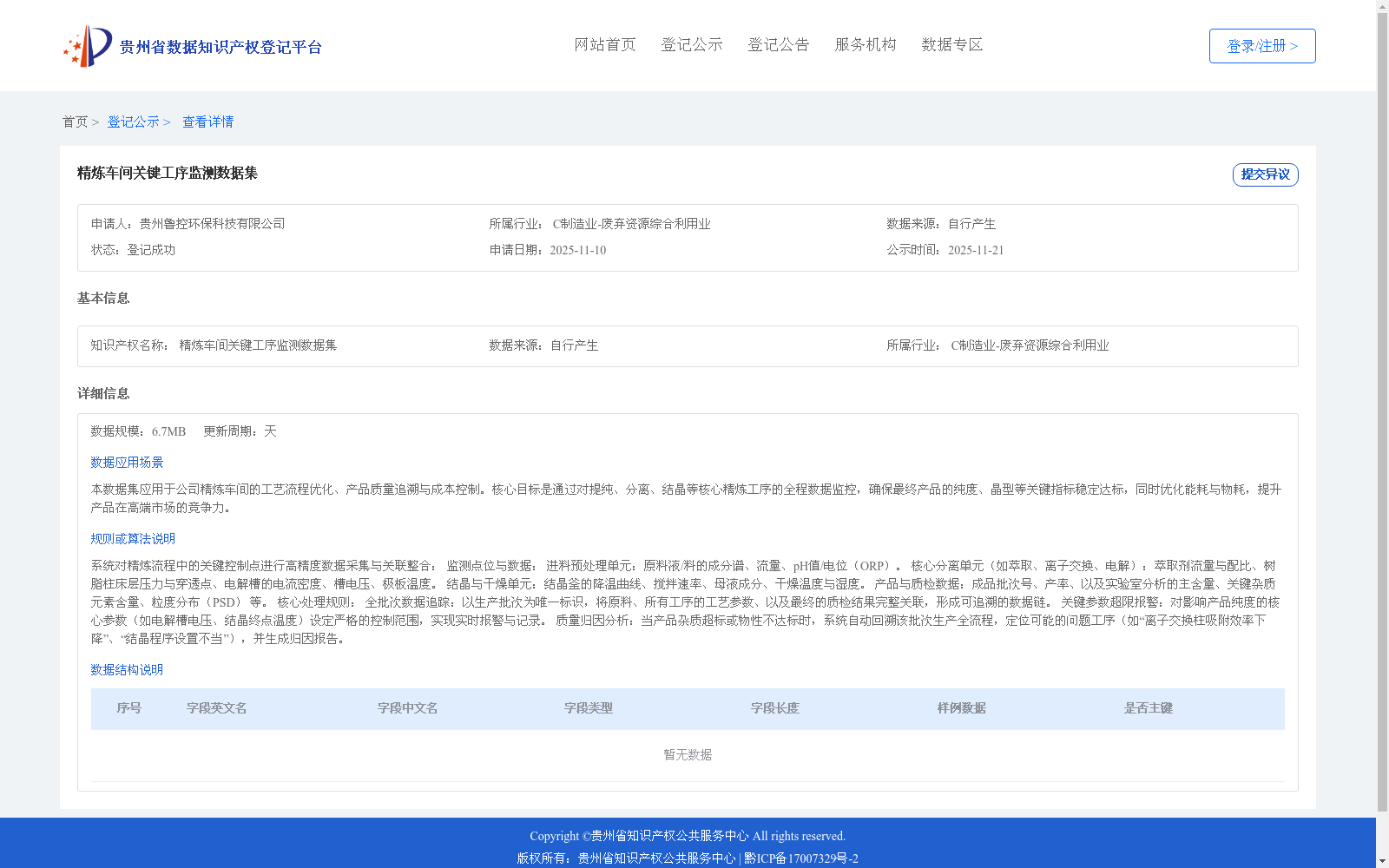
系统对精炼流程中的关键控制点进行高精度数据采集与关联整合: 监测点位与数据: 进料预处理单元:原料液/料的成分谱、流量、pH值/电位(ORP)。 核心分离单元(如萃取、离子交换、电解):萃取剂流量与配比、树脂柱床层压力与穿透点、电解槽的电流密度、槽电压、极板温度。 结晶与干燥单元:结晶釜的降温曲线、搅拌速率、母液成分、干燥温度与湿度。 产品与质检数据:成品批次号、产率、以及实验室分析的主含量、关键杂质元素含量、粒度分布(PSD) 等。 核心处理规则: 全批次数据追踪:以生产批次为唯一标识,将原料、所有工序的工艺参数、以及最终的质检结果完整关联,形成可追溯的数据链。 关键参数超限报警:对影响产品纯度的核心参数(如电解槽电压、结晶终点温度)设定严格的控制范围,实现实时报警与记录。 质量归因分析:当产品杂质超标或物性不达标时,系统自动回溯该批次生产全流程,定位可能的问题工序(如“离子交换柱吸附效率下降”、“结晶程序设置不当”),并生成归因报告。
The system conducts high-precision data collection and correlation integration for key control points in the refining process: ### Monitoring Points and Collected Data 1. Feed Pretreatment Unit: Composition spectrum of feed liquid or feedstock, flow rate, pH value and oxidation-reduction potential (ORP). 2. Core Separation Units (e.g., extraction, ion exchange, electrolysis): Extractant flow rate and ratio, resin column bed pressure and breakthrough point, current density of electrolytic cell, cell voltage, and electrode plate temperature. 3. Crystallization and Drying Units: Cooling curve of crystallizer, stirring rate, mother liquor composition, drying temperature and humidity. 4. Product and Quality Inspection Data: Finished product batch number, yield, laboratory-analyzed main component content, content of key impurity elements, particle size distribution (PSD), etc. ### Core Processing Rules 1. Full Batch Data Tracing: Taking the production batch as the unique identifier, fully correlate raw materials, process parameters of all operational procedures, and final quality inspection results to form a traceable data chain. 2. Key Parameter Out-of-Limit Alarm: Set strict control limits for core parameters affecting product purity (e.g., electrolytic cell voltage, crystallization endpoint temperature) to enable real-time alarming and logging. 3. Quality Attribution Analysis: When product impurities exceed specifications or physical properties fail to meet requirements, the system automatically traces the entire production process of the corresponding batch, identifies potential problematic process steps (e.g., "decreased adsorption efficiency of ion exchange column", "improper crystallization program settings"), and generates an attribution analysis report.