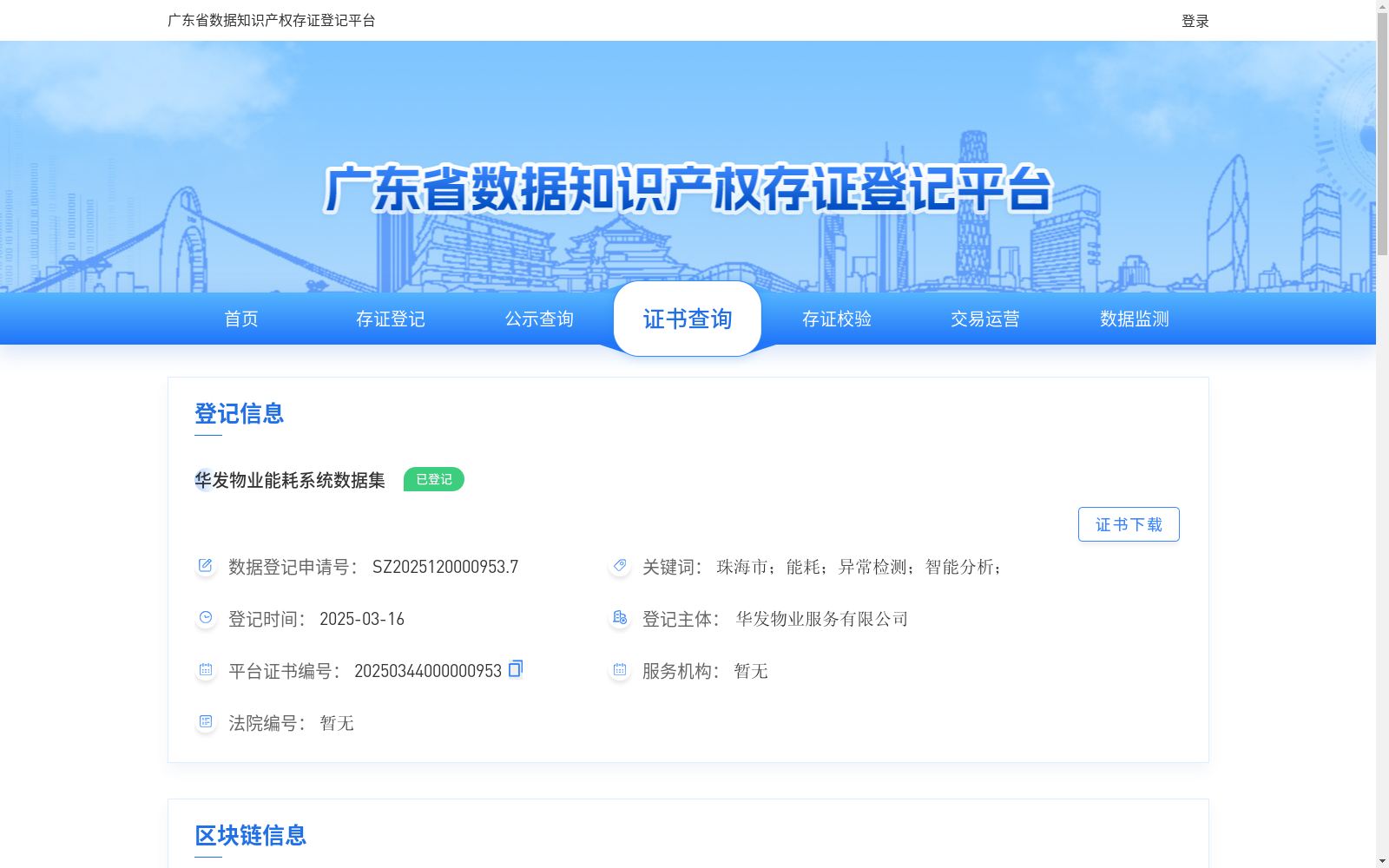
华发物业能耗系统数据集
收藏资源简介:
通过多种智能化设备和数据采集方式,实时或定期获取各类能耗数据,涵盖电力、水等能源的使用信息。系统通过智能电表、水表等物联网设备实时采集能耗数据,结合手工录入机制,确保数据的全面性和准确性。采集到的原始数据包括用电量、用水量等,具体表现为时间戳、设备ID、能耗数值等字段。 在数据处理阶段,系统通过数据清洗、归一化和聚合等规则对原始数据进行初步整理,剔除异常值并补全缺失数据,确保数据的完整性和一致性。采用时间序列分析、机器学习算法等方法对能耗数据进行深度分析,挖掘能耗趋势、峰值区间和异常消耗模式。通过图表、曲线和热力图等可视化形式,系统直观展示能耗变化趋势,帮助用户快速了解能源使用状况。 在应用场景方面,本数据产品主要服务于物业管理和节能优化。物业管理人员可以通过系统实时监控各楼栋、楼层或设备的能耗情况,识别高能耗区域并制定针对性的节能措施;根据系统提供的个性化节能建议,优化设备运行时间、调整照明与空调策略,实现能源消耗的最优化。
Energy consumption data of various types, including usage information of energy resources such as electricity and water, is collected in real-time or periodically through multiple intelligent devices and data acquisition modalities. The system collects energy consumption data in real-time via IoT-enabled devices such as smart electricity meters and water meters, supplemented by a manual entry mechanism to guarantee the comprehensiveness and accuracy of the collected data. The collected raw data covers metrics such as electricity consumption and water consumption, with specific fields including timestamp, device ID, and energy consumption value. In the data processing phase, the system conducts preliminary organization of the raw data through rules including data cleaning, normalization, and aggregation, eliminating outliers and complementing missing data to ensure data integrity and consistency. Deep analysis of the energy consumption data is performed using methods such as time series analysis and machine learning algorithms, to uncover energy consumption trends, peak intervals, and abnormal consumption patterns. Through visualization forms such as charts, curves, and heatmaps, the system intuitively presents the changing trends of energy consumption, enabling users to quickly grasp the status of energy usage. For application scenarios, this data product primarily serves property management and energy conservation optimization. Property managers can monitor the energy consumption of individual buildings, floors, or devices in real-time via the system, identify high-energy-consumption zones, and develop targeted energy conservation measures. Based on the personalized energy conservation recommendations provided by the system, they can optimize device operating hours, adjust lighting and air conditioning strategies, and achieve optimal energy consumption.