
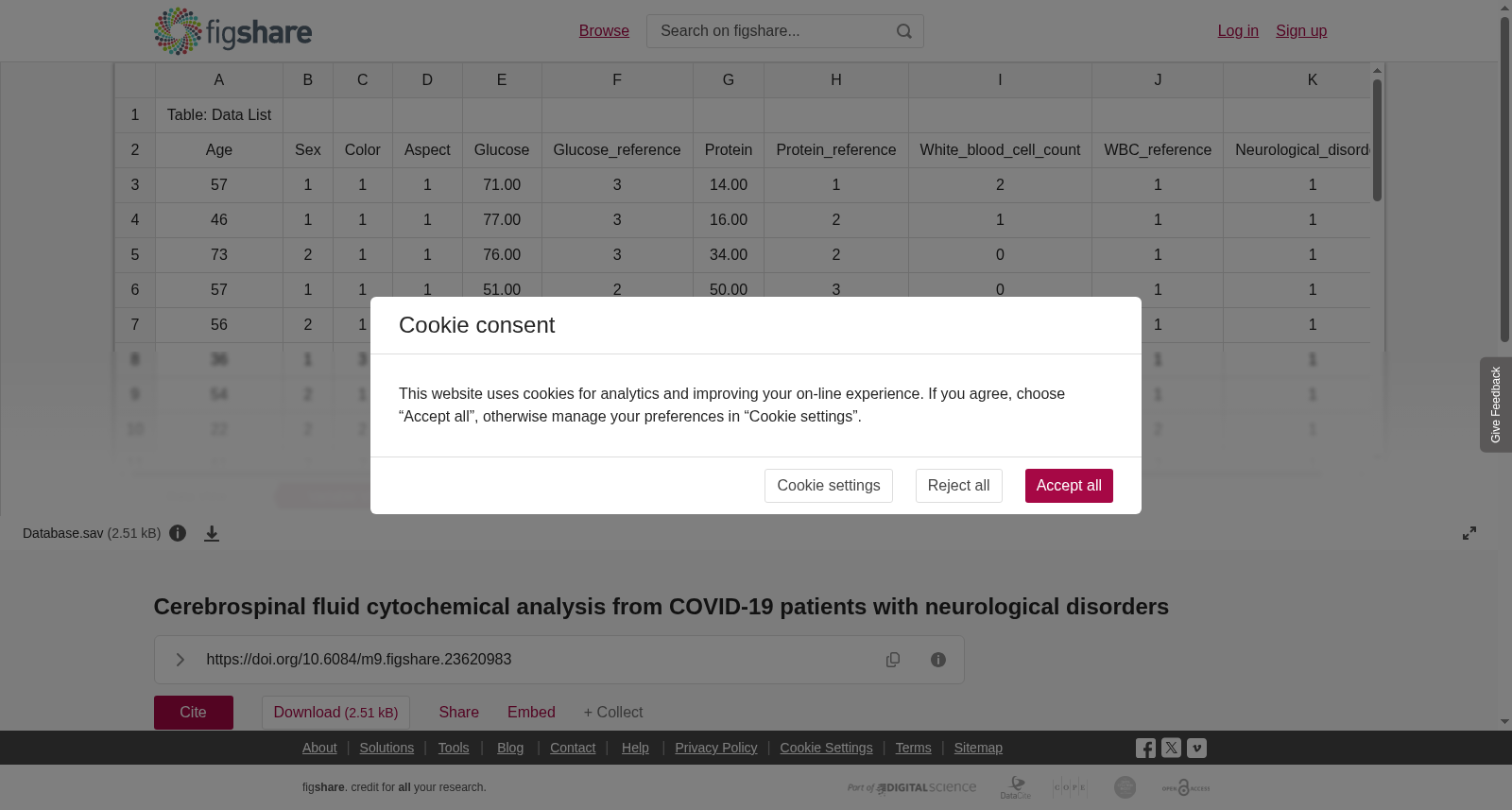
<strong>Cerebrospinal fluid cytochemical analysis from COVID-19 patients with neurological disorders</strong>
收藏DataCite Commons2023-07-04 更新2024-08-18 收录
下载链接:
https://figshare.com/articles/dataset/_strong_Cerebrospinal_fluid_cytochemical_analysis_from_COVID-19_patients_with_neurological_disorders_strong_/23620983/1
下载链接
链接失效反馈官方服务:
资源简介:
<strong>Background:</strong> The COVID-19 pandemic caused by SARS-CoV-2 has affected millions of people around the world. Most cytochemical studies of cerebrospinal fluid (CSF) in patients infected with SARS-CoV-2 have shown abnormal results. The objective of the present investigation was to determine the physical, cytological, and chemical alterations of the CSF cytochemical examination of COVID-19 patients with neurological disorders in Peru. <strong>Methods:</strong> An observational and cross-sectional study was carried out at the Edgardo Rebagliati Martins Hospital. The study population consisted of 94 CSF samples obtained by lumbar puncture from inpatient patients. Likewise, the paired T-test and one-way ANOVA with the Bonferroni post-hoc test was used to determine the differences in the values of CSF biochemical markers. <strong>Results:</strong> The most frequent neurological disorders were encephalopathy (43%) and brain tumor (23%). The most relevant physical characteristics were cloudy and reddish fluids in the brain tumor and intracerebral hemorrhage; however, in encephalopathies, transparent-looking liquids were observed. CSF glucose from patients with encephalopathy (30%) and intracerebral hemorrhage (13%) had concentrations >70 mg/dL. Proteins >45mg/dl corresponded to 20% of patients with encephalopathy and 17% of patients with intracerebral hemorrhage and brain tumor. Likewise, no differences were found in glucose concentration between neurological disorders (p>0.05); however, differences in protein concentration were observed (p=0.001). Finally, among the cytological characteristics, it was found that patients with encephalopathy (33%) and brain tumor (20%) presented a leukocyte count <5 cells/ul. <strong>Conclusion:</strong> These findings suggest that the characteristics of CSF may differ depending on the type of neurological complication experienced by patients with COVID-19.
**背景:** 由严重急性呼吸综合征冠状病毒2型(SARS-CoV-2)引发的新型冠状病毒肺炎(COVID-19)大流行已波及全球数百万民众。针对感染SARS-CoV-2患者的脑脊液(cerebrospinal fluid, CSF)细胞化学研究大多显示结果异常。本研究旨在明确秘鲁合并神经系统疾病的COVID-19患者脑脊液细胞化学检查中的物理、细胞学及化学特征变化。**方法:** 本研究在埃德加多·雷巴利亚蒂·马丁斯医院(Edgardo Rebagliati Martins Hospital)开展,为观察性横断面研究。研究对象为94份经腰椎穿刺采集的住院患者脑脊液样本。本研究采用配对t检验及带Bonferroni事后检验的单因素方差分析(one-way ANOVA),以比较脑脊液生化标志物水平的组间差异。**结果:** 最常见的神经系统疾病为脑病(43%)与脑肿瘤(23%)。脑肿瘤及脑出血患者的脑脊液物理外观多为浑浊、呈淡红色;而脑病患者的脑脊液外观则为透明。脑病患者(30%)及脑出血患者(13%)的脑脊液葡萄糖浓度>70mg/dL。蛋白质浓度>45mg/dL的病例在脑病患者中占20%,在脑出血及脑肿瘤患者中占17%。组间葡萄糖浓度比较未发现显著差异(p>0.05);但蛋白质浓度的组间差异具有统计学意义(p=0.001)。细胞学特征方面,脑病患者(33%)与脑肿瘤患者(20%)的白细胞计数<5个/μL。**结论:** 本研究结果提示,COVID-19患者所并发的神经系统并发症类型不同,其脑脊液特征或存在差异。
提供机构:
figshare创建时间:
2023-07-04
搜集汇总
数据集介绍
以上内容由遇见数据集搜集并总结生成

暂无相关数据集


