
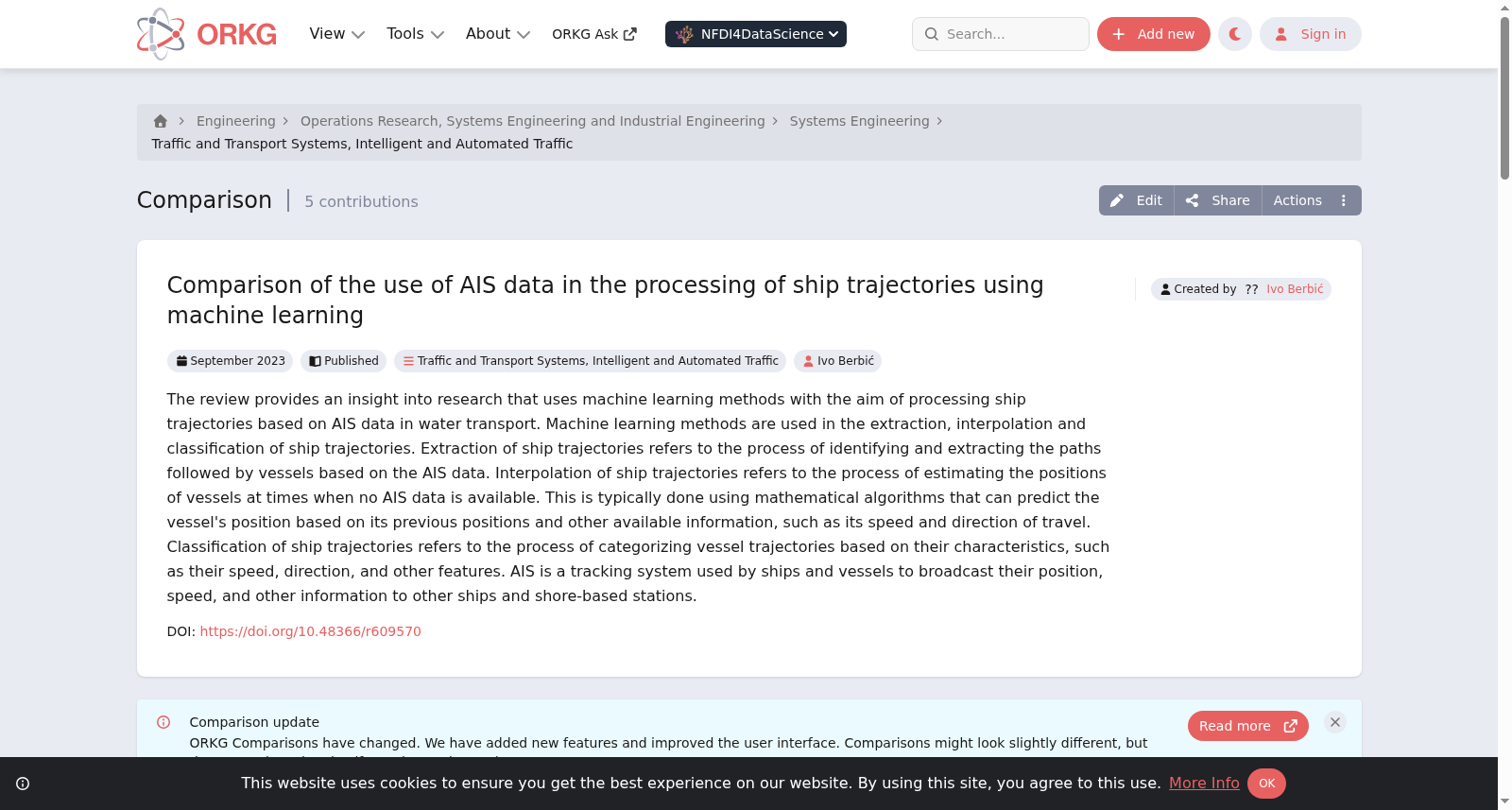
Comparison of the use of AIS data in the processing of ship trajectories using machine learning
收藏DataCite Commons2023-09-05 更新2024-07-13 收录
下载链接:
https://orkg.org/comparison/R609570/
下载链接
链接失效反馈官方服务:
资源简介:
The review provides an insight into research that uses machine learning methods with the aim of processing ship trajectories based on AIS data in water transport. Machine learning methods are used in the extraction, interpolation and classification of ship trajectories. Extraction of ship trajectories refers to the process of identifying and extracting the paths followed by vessels based on the AIS data. Interpolation of ship trajectories refers to the process of estimating the positions of vessels at times when no AIS data is available. This is typically done using mathematical algorithms that can predict the vessel's position based on its previous positions and other available information, such as its speed and direction of travel. Classification of ship trajectories refers to the process of categorizing vessel trajectories based on their characteristics, such as their speed, direction, and other features. AIS is a tracking system used by ships and vessels to broadcast their position, speed, and other information to other ships and shore-based stations.
本综述系统梳理了基于船舶自动识别系统(Automatic Identification System,简称AIS)数据开展水上运输船舶轨迹处理的机器学习相关研究。相关研究将机器学习方法应用于船舶轨迹的提取、插值与分类三项核心任务。其中,船舶轨迹提取指依托AIS数据识别并提取船舶实际航行路径的过程;船舶轨迹插值指在无AIS数据的时段内估算船舶位置的过程,此类方法通常借助数学算法,结合船舶过往位置、航速与航向等可用信息完成位置预测;船舶轨迹分类指依据船舶航速、航向及其他特征对轨迹进行分类归类的过程。AIS是船舶用于向其他船舶及岸基基站广播自身位置、航速等信息的跟踪系统。
创建时间:
2023-09-05
搜集汇总
数据集介绍
背景与挑战
背景概述
该数据集是一个比较研究,总结了2023年9月发表的关于使用机器学习方法处理基于AIS数据的船舶轨迹的综述。它聚焦于轨迹提取、插值和分类,并比较了五个相关研究,涵盖不同地理位置、AIS数据来源和方法,旨在提高船舶轨迹处理的准确性和效率。
以上内容由遇见数据集搜集并总结生成

暂无相关数据集


