经销商布局及销售产品流向分析数据集合
收藏资源简介:
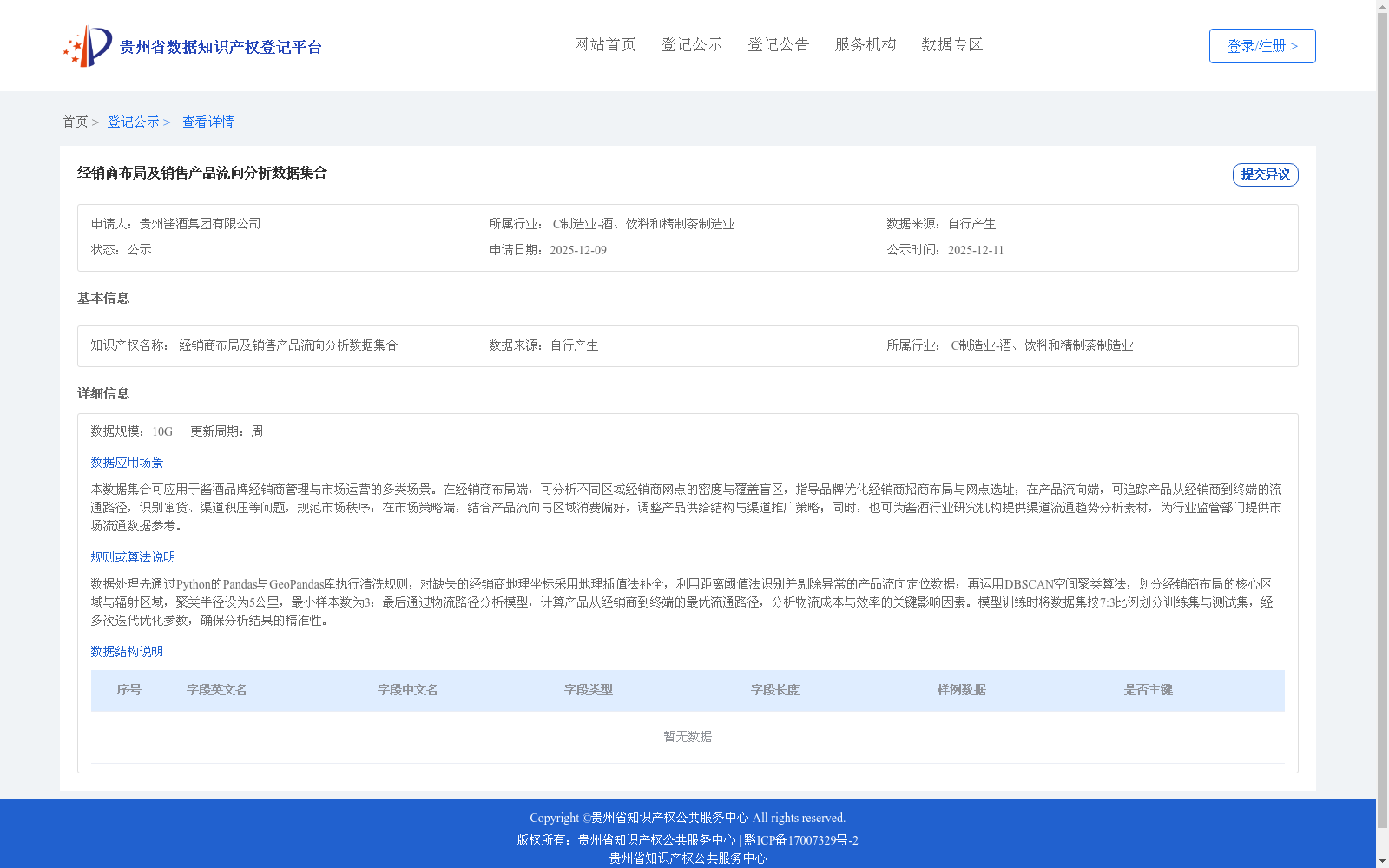
数据处理先通过Python的Pandas与GeoPandas库执行清洗规则,对缺失的经销商地理坐标采用地理插值法补全,利用距离阈值法识别并剔除异常的产品流向定位数据;再运用DBSCAN空间聚类算法,划分经销商布局的核心区域与辐射区域,聚类半径设为5公里,最小样本数为3;最后通过物流路径分析模型,计算产品从经销商到终端的最优流通路径,分析物流成本与效率的关键影响因素。模型训练时将数据集按7:3比例划分训练集与测试集,经多次迭代优化参数,确保分析结果的精准性。
For data processing, cleaning rules were first implemented using Python's Pandas and GeoPandas libraries. Missing geographic coordinates of distributors were supplemented via geospatial interpolation, and abnormal product flow positioning data were identified and eliminated using the distance threshold method. Subsequently, the DBSCAN spatial clustering algorithm was adopted to partition the distributor layout into core areas and radiation areas, with the clustering radius set to 5 kilometers and the minimum sample size set to 3. Finally, the logistics path analysis model was utilized to calculate the optimal circulation path of products from distributors to terminal customers, and analyze the key influencing factors of logistics cost and efficiency. For model training, the dataset was split into training and test sets at a 7:3 ratio, and parameters were optimized through multiple iterations to ensure the accuracy of the analysis results.