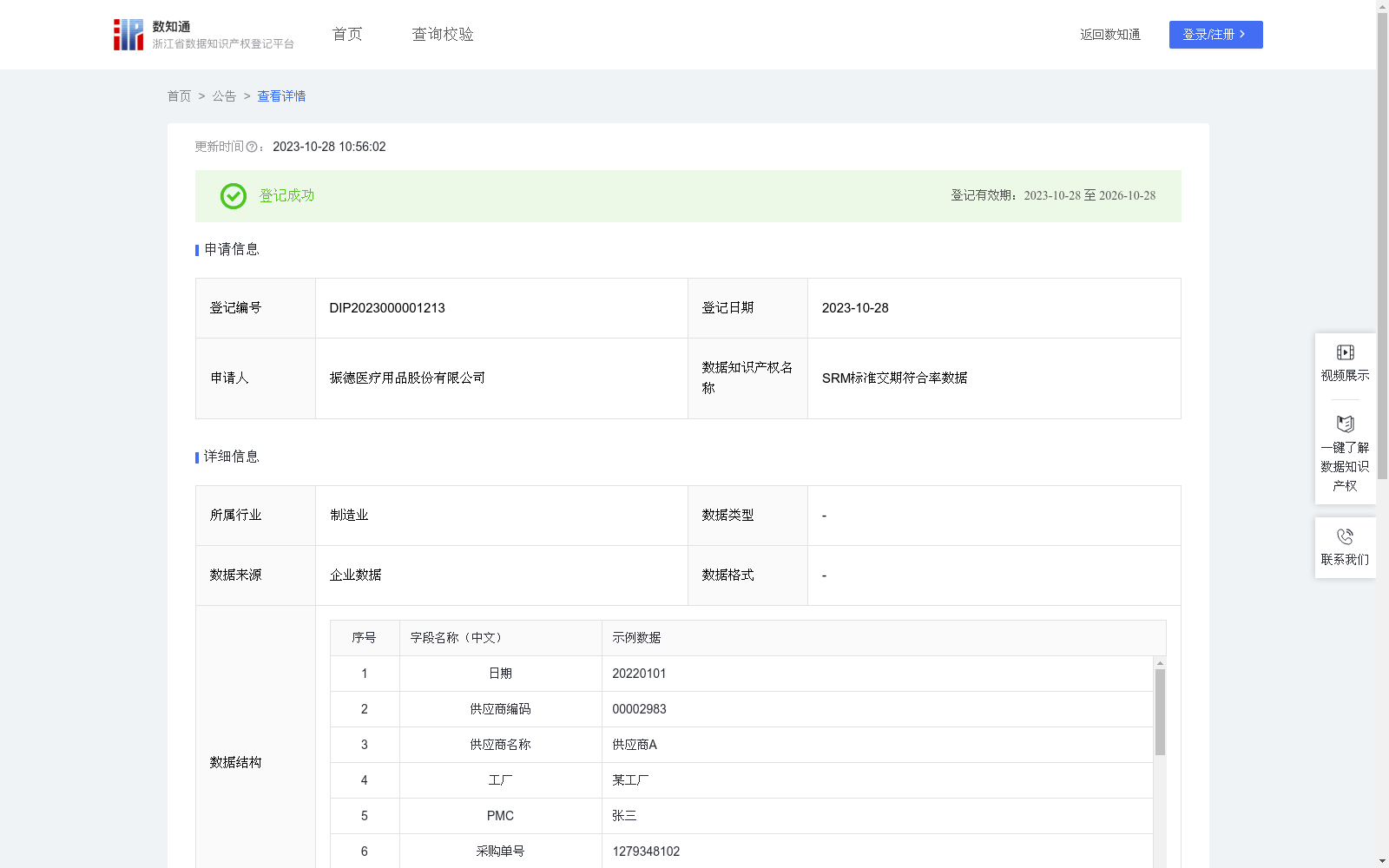
SRM标准交期符合率数据
收藏资源简介:
SRM供应商关系管理系统用于制造业是用来管理企业,主要包含采购管理、供应链协同、供应商管理三大基础模块。买方有购买需求,卖家自然会找上门来提供服务,企业无需花费心思去维护与供应商之间的关系。通过SRM标准交期符合率算法规则能够加强业务部门对采购标准交期符合率情况的趋势发展的动向。在信息数据的支持下,SRM标准交期符合率算法规则不断的完善调整,逐步加强对日期-供应商名称等维度的标准交期符合率数据方面的管理。SRM标准交期符合率数据的算法规则包括以下几个方面:1、数据采集: srm供应链管理系统通过自动化的方式从采购各个流程中收集数据,包括采购成本、采购周期等,并利用这些数据预测未来的风险。2、数据校验:采用检验和数据方式校验,校验一组数据项的和。3、数据处理:明确业务部门需求逻辑,根据后台表逻辑在SRM数据库中搭建SQL模型。将下单日期、需求交期、是否符合交期等,根据日期、供应商名称维度分组汇总即使用已分组平均公式σ=√Σ(X1-X2)^2/(n+2)。标准采购周期W1= DATEDIFF(下单日期, 需求交期);实际采购周期W2= DATEDIFF(下单日期, 需求交期)*k;当“是否符合交期”为不符合时记为q1,否则就为q2并记录为交期判断字段,根据公式交期达成总数M0=Σ(| q1-q2|)/Σ(n+2)。记m1为第一条记录数,m2为第二条记录数,则交期总数M=m1+ m2+… mn;标准交期符合率p= M0 / M*c,c为交期达成总数与交期总数占比单项式中的基础系数。该算法能更好把控日期-供应商名称等维度相对于下单日期、是否符合交期等基础数据方面的管理。
The SRM (Supplier Relationship Management) system for enterprise management in the manufacturing industry mainly includes three core modules: procurement management, supply chain collaboration, and supplier management. When buyers have purchasing demands, sellers will proactively provide services, eliminating the need for enterprises to devote effort to maintaining supplier relationships. The SRM standard on-time delivery compliance rate algorithm can help business departments better track the trend of procurement standard on-time delivery compliance. Supported by information and data, the SRM standard on-time delivery compliance rate algorithm is continuously optimized and adjusted, gradually strengthening the management of on-time delivery compliance data across dimensions such as date and supplier name. The algorithm rules for SRM standard on-time delivery compliance rate data are as follows: 1. Data collection: The SRM supply chain management system automatically collects data from various procurement processes, including procurement costs and procurement cycles, and uses this data to predict future risks. 2. Data verification: The checksum method is adopted to verify the sum of a set of data items. 3. Data processing: Clarify the requirement logic of the business department, and build an SQL model in the SRM database based on the backend table logic. Group and summarize dimensions such as order date, required delivery date, and delivery compliance status according to date and supplier name, using the grouped average formula σ=√Σ(X₁-X₂)²/(n+2). The standard procurement cycle W₁ = DATEDIFF(order date, required delivery date); the actual procurement cycle W₂ = DATEDIFF(order date, required delivery date)*k. Record q1 when the "delivery compliance status" is non-compliant, otherwise record q2 as the delivery judgment field. According to the formula, the total number of on-time deliveries M₀=Σ(|q₁-q₂|)/Σ(n+2). Let m₁ be the number of the first record, m₂ the number of the second record, and so on, then the total number of records M = m₁ + m₂ + … + mₙ. The standard on-time delivery compliance rate p = M₀ / M * c, where c is the basic coefficient in the monomial of the proportion of the total number of on-time deliveries to the total number of records. This algorithm can better manage dimensions such as date and supplier name based on basic data such as order date and delivery compliance status.