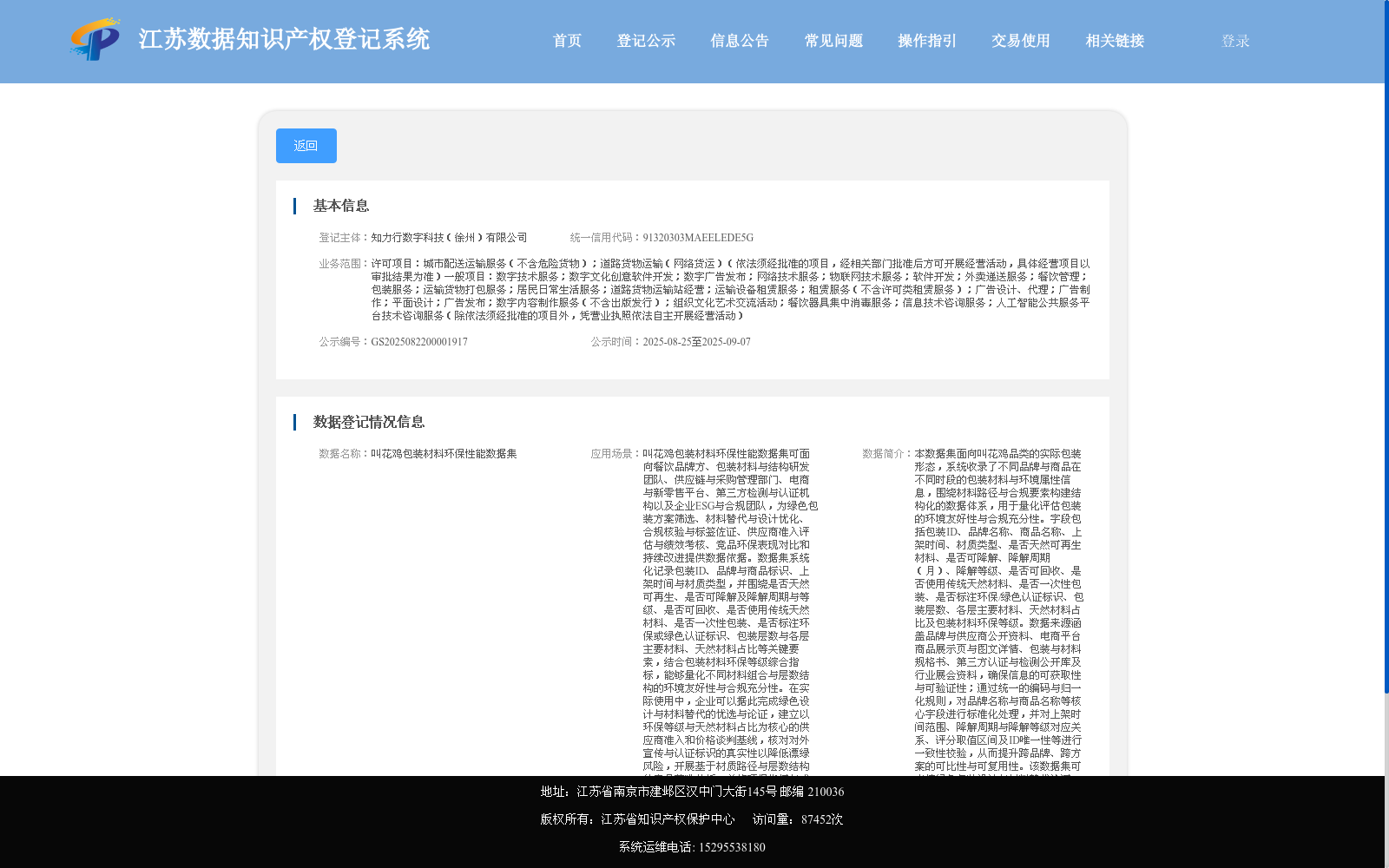
叫花鸡包装材料环保性能数据集
收藏资源简介:
本数据集面向叫花鸡品类的实际包装形态,系统收录了不同品牌与商品在不同时段的包装材料与环境属性信息,围绕材料路径与合规要素构建结构化的数据体系,用于量化评估包装的环境友好性与合规充分性。字段包括包装ID、品牌名称、商品名称、上架时间、材质类型、是否天然可再生材料、是否可降解、降解周期(月)、降解等级、是否可回收、是否使用传统天然材料、是否一次性包装、是否标注环保/绿色认证标识、包装层数、各层主要材料、天然材料占比及包装材料环保等级。数据来源涵盖品牌与供应商公开资料、电商平台商品展示页与图文详情、包装与材料规格书、第三方认证与检测公开库及行业展会资料,确保信息的可获取性与可验证性;通过统一的编码与归一化规则,对品牌名称与商品名称等核心字段进行标准化处理,并对上架时间范围、降解周期与降解等级对应关系、评分取值区间及ID唯一性等进行一致性校验,从而提升跨品牌、跨方案的可比性与可复用性。该数据集可支持绿色包装设计与材料替代论证、供应商准入与采购评分、合规披露与标签核验、竞品环保表现对比与趋势监测,以及AI驱动的环保等级预测与预警模型训练,适用于餐饮品牌方、中央厨房与预制菜企业、包装材料与结构研发团队、市场研究机构、电商与新零售平台在产品设计优化与ESG策略制定中的数据化决策。
This dataset focuses on the actual packaging forms of the beggar's chicken category. It systematically collects packaging material and environmental attribute information of different brands and products across different time periods, and constructs a structured data system centered on material pathways and compliance elements for quantitatively evaluating the environmental friendliness and compliance adequacy of packaging. The fields include packaging ID, brand name, product name, listing time, material type, whether it is a naturally renewable material, whether it is degradable, degradation cycle (in months), degradation grade, whether it is recyclable, whether traditional natural materials are used, whether it is single-use packaging, whether environmental/green certification logos are marked, number of packaging layers, main materials of each layer, proportion of natural materials, and environmental protection grade of packaging materials. The data sources cover public materials of brands and suppliers, product display pages and graphic details of e-commerce platforms, packaging and material specifications, third-party certification and testing public databases, and industry exhibition materials, ensuring the accessibility and verifiability of information. Through unified coding and normalization rules, core fields such as brand names and product names are standardized, and consistency checks are conducted on the range of listing time, the corresponding relationship between degradation cycle and degradation grade, score value range, and ID uniqueness, thereby improving the comparability and reusability across brands and solutions. This dataset can support green packaging design and material substitution demonstration, supplier access and procurement scoring, compliance disclosure and label verification, competitor environmental performance comparison and trend monitoring, as well as AI-driven environmental protection grade prediction and early warning model training. It is applicable to data-driven decision-making in product design optimization and ESG strategy formulation for catering brands, central kitchens and pre-prepared dish enterprises, packaging material and structure R&D teams, market research institutions, e-commerce and new retail platforms.