一种污水净化动态数据集
收藏资源简介:
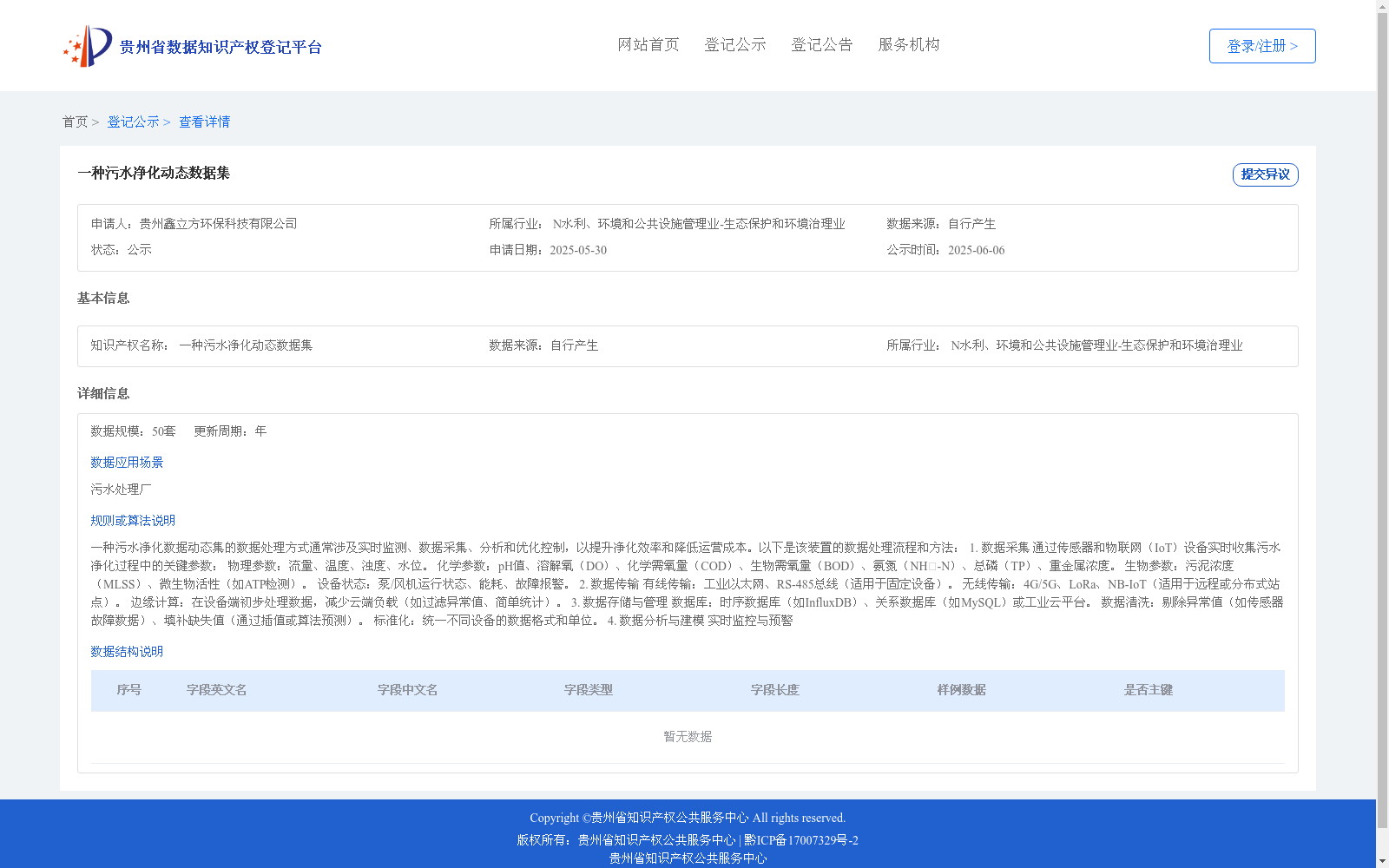
一种污水净化数据动态集的数据处理方式通常涉及实时监测、数据采集、分析和优化控制,以提升净化效率和降低运营成本。以下是该装置的数据处理流程和方法: 1. 数据采集 通过传感器和物联网(IoT)设备实时收集污水净化过程中的关键参数: 物理参数:流量、温度、浊度、水位。 化学参数:pH值、溶解氧(DO)、化学需氧量(COD)、生物需氧量(BOD)、氨氮(NH₃-N)、总磷(TP)、重金属浓度。 生物参数:污泥浓度(MLSS)、微生物活性(如ATP检测)。 设备状态:泵/风机运行状态、能耗、故障报警。 2. 数据传输 有线传输:工业以太网、RS-485总线(适用于固定设备)。 无线传输:4G/5G、LoRa、NB-IoT(适用于远程或分布式站点)。 边缘计算:在设备端初步处理数据,减少云端负载(如过滤异常值、简单统计)。 3. 数据存储与管理 数据库:时序数据库(如InfluxDB)、关系数据库(如MySQL)或工业云平台。 数据清洗:剔除异常值(如传感器故障数据)、填补缺失值(通过插值或算法预测)。 标准化:统一不同设备的数据格式和单位。 4. 数据分析与建模 实时监控与预警
The data processing method for a dynamic sewage purification dataset typically involves real-time monitoring, data collection, analysis, and optimized control to improve purification efficiency and reduce operational costs. The following are the data processing procedures and methods for this sewage purification unit: 1. Data Collection Key parameters in the sewage purification process are collected in real time via sensors and Internet of Things (IoT) devices: - Physical parameters: flow rate, temperature, turbidity, water level. - Chemical parameters: pH value, dissolved oxygen (DO), chemical oxygen demand (COD), biochemical oxygen demand (BOD), ammonia nitrogen (NH₃-N), total phosphorus (TP), heavy metal concentration. - Biological parameters: mixed liquor suspended solids (MLSS), microbial activity (e.g., "ATP detection"). - Equipment status: operating status of pumps/fans, energy consumption, fault alarms. 2. Data Transmission - Wired transmission: industrial Ethernet, RS-485 bus (applicable to fixed equipment). - Wireless transmission: 4G/5G, LoRa, NB-IoT (applicable to remote or distributed sites). - Edge computing: preliminarily process data at the device end to reduce cloud load (e.g., filtering outliers, simple statistical calculations). 3. Data Storage and Management - Databases: time-series databases (e.g., InfluxDB), relational databases (e.g., MySQL), or industrial cloud platforms. - Data cleaning: remove outliers (e.g., sensor fault data), fill missing values via interpolation or algorithmic prediction. - Standardization: unify data formats and units across different devices. 4. Data Analysis and Modeling - Real-time monitoring and early warning