重点关注桥梁分析数据集
收藏资源简介:
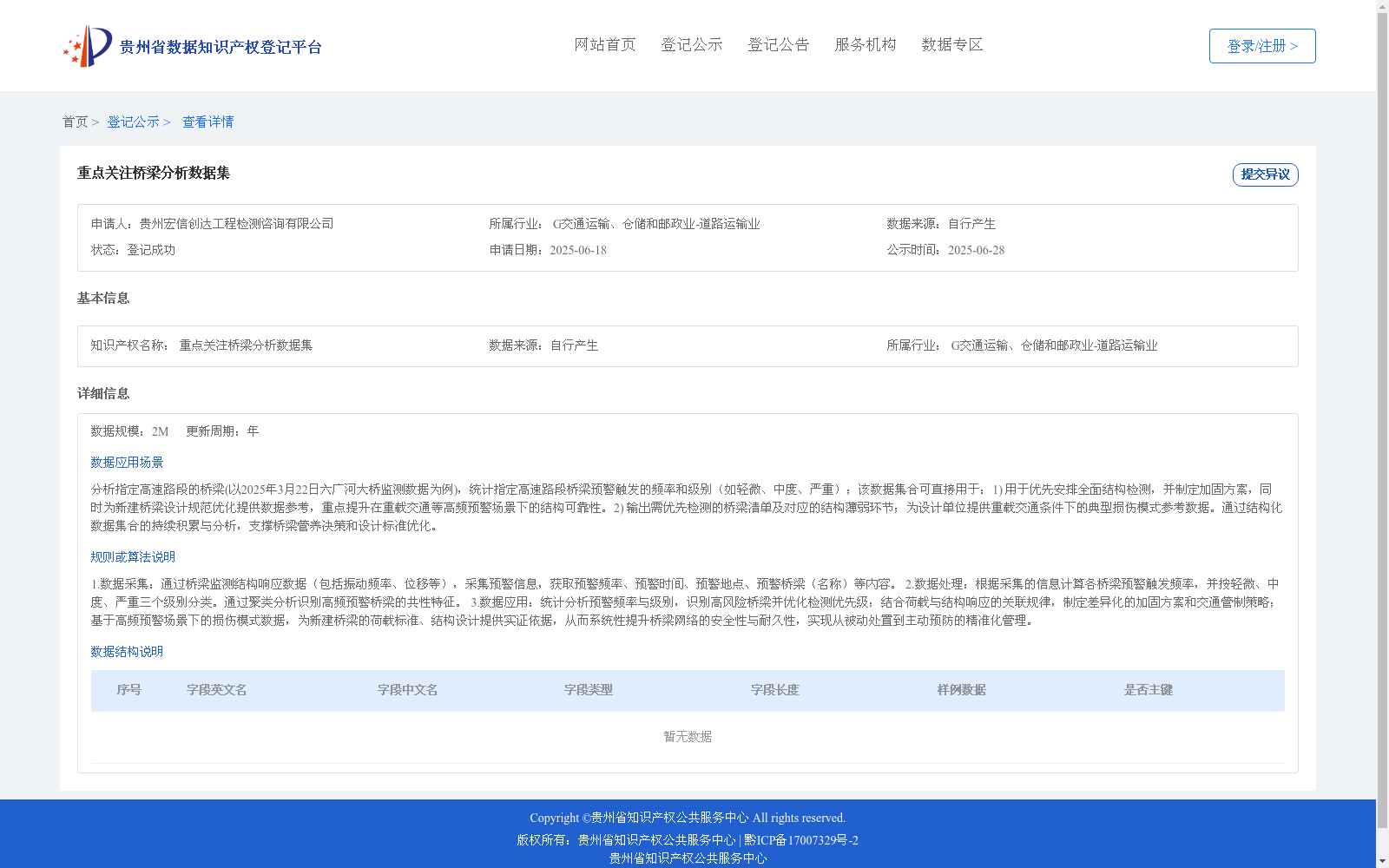
1.数据采集:通过桥梁监测结构响应数据(包括振动频率、位移等),采集预警信息,获取预警频率、预警时间、预警地点、预警桥梁(名称)等内容。 2.数据处理:根据采集的信息计算各桥梁预警触发频率,并按轻微、中度、严重三个级别分类。通过聚类分析识别高频预警桥梁的共性特征。 3.数据应用:统计分析预警频率与级别,识别高风险桥梁并优化检测优先级;结合荷载与结构响应的关联规律,制定差异化的加固方案和交通管制策略;基于高频预警场景下的损伤模式数据,为新建桥梁的荷载标准、结构设计提供实证依据,从而系统性提升桥梁网络的安全性与耐久性,实现从被动处置到主动预防的精准化管理。
1. Data Collection: Structural response data of bridges (including vibration frequency, displacement, etc.) is collected via bridge monitoring, together with early warning information, covering early warning frequency, early warning time, early warning location, and the name of the early-warning bridge. 2. Data Processing: Calculate the early warning trigger frequency of each bridge based on the collected information, and classify the frequencies into three levels: mild, moderate, and severe. Cluster analysis is adopted to identify the common characteristics of bridges with high-frequency early warnings. 3. Data Application: Conduct statistical analysis on early warning frequencies and their corresponding levels to identify high-risk bridges and optimize inspection priorities; combine the correlation rules between loads and structural responses to formulate differentiated reinforcement schemes and traffic control strategies; based on damage pattern data from high-frequency early warning scenarios, provide empirical evidence for load standards and structural design of new bridges, thereby systematically enhancing the safety and durability of the bridge network, and realizing precise management from passive disposal to active prevention.