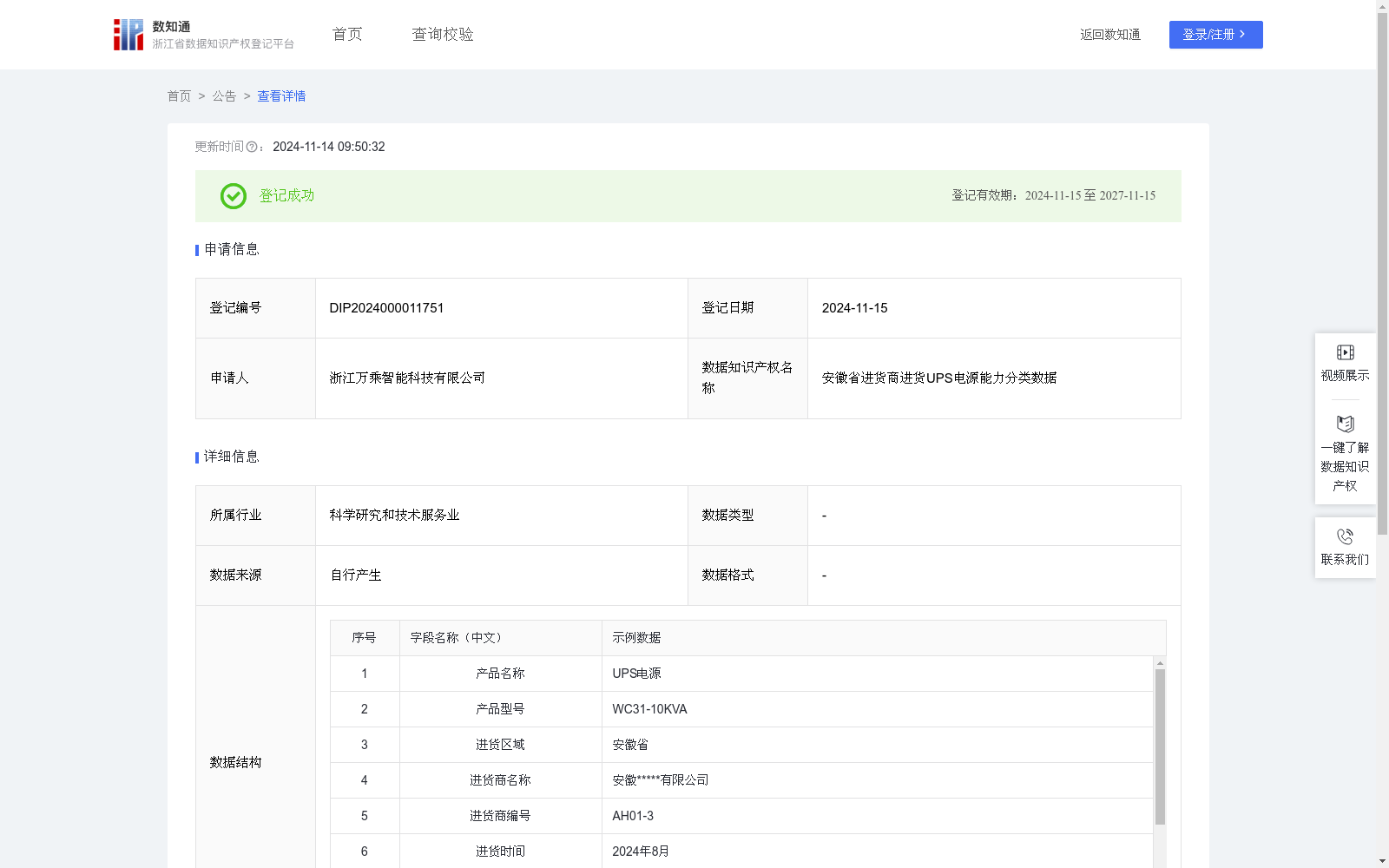
安徽省进货商进货UPS电源能力分类数据
收藏资源简介:
UPS是一种能够提供持续电力供应的设备,主要用于在市电中断时保护计算机和其他电子设备免受损害。统计分析每个月安徽省进货商进货UPS电源的金额数据,从而对进货商进行分类级别,为所有企业针对安徽省内各进货者对该产品的喜好有针对性的制定提供数据支持,例如可加大生产“A类进货商”进货的规格产品产量,保持好“B类进货商”进货的规格产品产量,减少生产“C类进货商”进货的规格产品产量。1、数据采集:采集当月进货商进货UPS电源的金额数据。2、数据加工:当月进货的总金额为进货商进货的金额之和,该进货商的进货占比=当月该进货商进货金额/当月进货的总金额*100%。3、数据应用:对不同的进货商分类运用ABC分类法,对占比20%以上的,给予“A类进货商”分类;占比10%到20%区间的,则给予“B类进货商”分类;占比在0%到10%区间,则给予“C类进货商”分类,例如可加大生产“A类进货商”进货的规格产品产量,保持好“B类进货商”进货的规格产品产量,减少生产“C类进货商”进货的规格产品产量。
UPS (Uninterruptible Power Supply) is a device that provides uninterrupted power, primarily used to protect computers and other electronic equipment from damage when mains power is interrupted. This dataset conducts statistical analysis on monthly UPS purchase amount data of purchasers in Anhui Province to classify these purchasers into different tiers, providing data support for enterprises to formulate targeted strategies based on the product preferences of each local purchaser. For example, enterprises can increase the production of products matching the purchase specifications of "Class A purchasers", maintain the production volume of products matching the purchase specifications of "Class B purchasers", and reduce the production of products matching the purchase specifications of "Class C purchasers". 1. Data Collection: Collect the UPS purchase amount data of all purchasers in the current month. 2. Data Processing: The total monthly purchase amount is the sum of the purchase amounts of all individual purchasers. The purchase proportion of a single purchaser is calculated as: (the purchaser's current month purchase amount / total monthly purchase amount) * 100%. 3. Data Application: Classify each purchaser using the ABC classification method: purchasers with a purchase proportion of over 20% are categorized as "Class A purchasers"; those with a proportion between 10% and 20% are categorized as "Class B purchasers"; and those with a proportion between 0% and 10% are categorized as "Class C purchasers". For instance, this classification enables enterprises to adjust production strategies accordingly, such as increasing production for products purchased by "Class A purchasers", maintaining production for products purchased by "Class B purchasers", and reducing production for products purchased by "Class C purchasers".