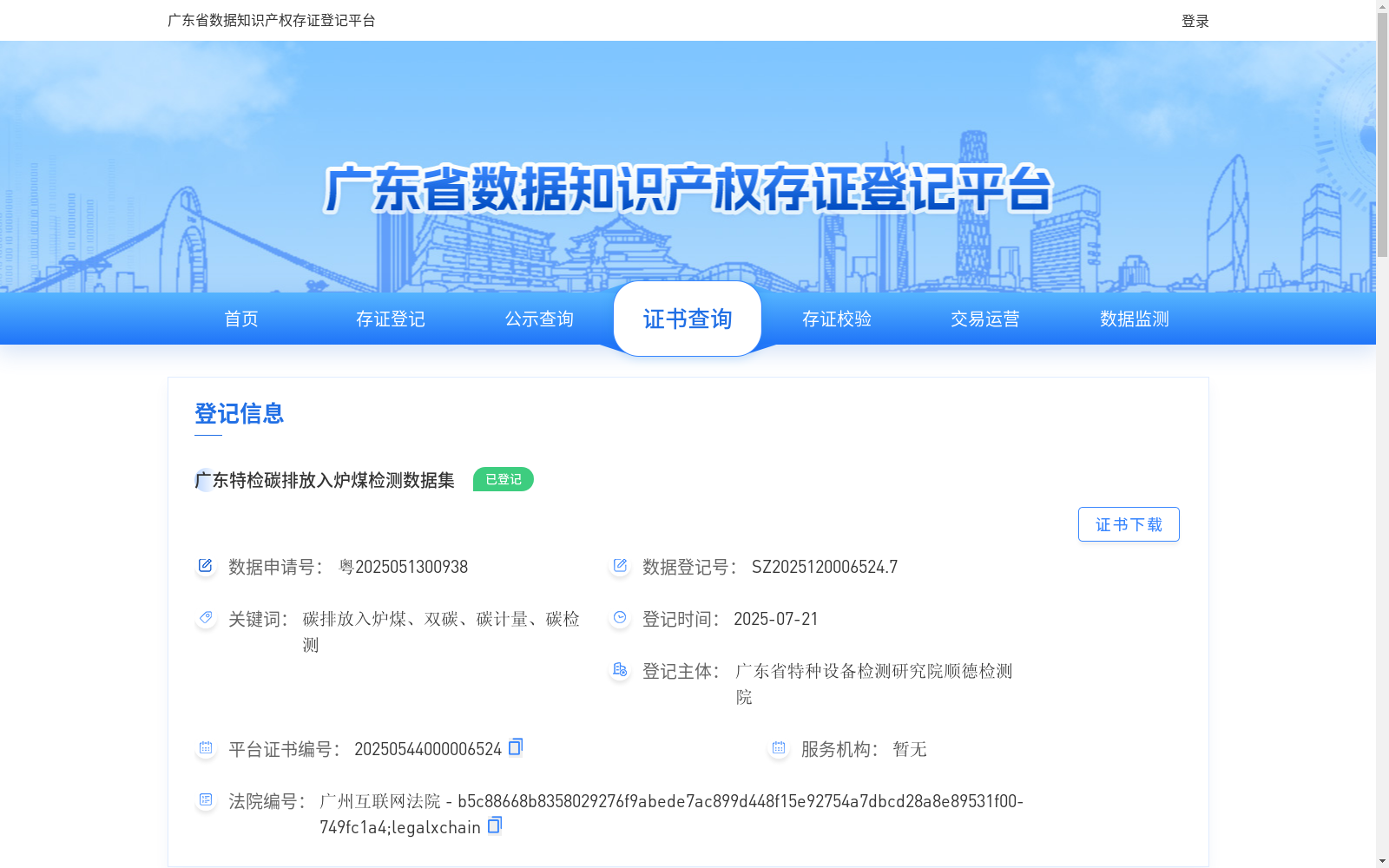
广东特检碳排放入炉煤检测数据集
收藏资源简介:
本数据基于碳排放入炉煤的煤质特性测试形成,涵盖水分、发热量、碳含量、氢含量、单位热值碳含量碳排放指标,并构建了多维度、精准化的碳排放分析模型,入炉煤的检测数据能实时反映煤炭在燃烧过程中的各种参数变化,如碳含量、硫含量、发热量等。这些数据与碳排放密切相关,通过对入炉煤的检测,可以及时掌握碳排放的动态变化情况,为企业的生产调控提供依据。长期的入炉煤检测数据可以显示出碳排放的稳定性特征。如果入炉煤的质量相对稳定,各项检测指标波动较小,那么碳排放也会相对稳定;反之,如果入炉煤的质量波动较大,如不同批次的煤碳含量差异明显,就会导致碳排放出现较大波动。在一定的生产条件下,入炉煤检测数据与碳排放之间存在着一定的规律性。通过应用本数据体系,可建立碳排放煤质动态监测与智能诊断机制,精准识别异常排放并快速实施减排优化,有效支撑"双碳"目标下的清洁生产要求。同时也为管理者开展设备能效对标、排放指标分配、环保绩效评估及低碳技术升级等决策工作提供了科学的数据支撑。
This dataset is developed based on coal quality characteristic tests of as-fired coal for carbon emission accounting, covering moisture content, heating value, carbon content, hydrogen content, and carbon emission index per unit calorific value. A multi-dimensional and precise carbon emission analysis model was constructed accordingly. The detection data of as-fired coal can reflect in real time the changes of various parameters during coal combustion, such as carbon content, sulfur content and heating value. These data are closely correlated with carbon emissions: through as-fired coal detection, the dynamic changes of carbon emissions can be grasped timely, providing a reliable basis for enterprise production regulation and control. Long-term as-fired coal detection data can reveal the stability characteristics of carbon emissions. If the quality of as-fired coal is relatively stable with minor fluctuations in various detection indicators, carbon emissions will also remain relatively stable. Conversely, significant fluctuations in as-fired coal quality—such as notable differences in carbon content across different coal batches—will lead to substantial fluctuations in carbon emissions. Under specific production conditions, a certain regularity exists between as-fired coal detection data and carbon emissions. By applying this dataset system, a dynamic monitoring and intelligent diagnosis mechanism for coal quality and carbon emissions can be established, enabling accurate identification of abnormal emissions and rapid implementation of emission reduction optimization, which effectively supports the clean production requirements under the "dual carbon" goals. Meanwhile, it provides scientific data support for managers to carry out decision-making work such as equipment energy efficiency benchmarking, emission index allocation, environmental performance evaluation and low-carbon technology upgrading.