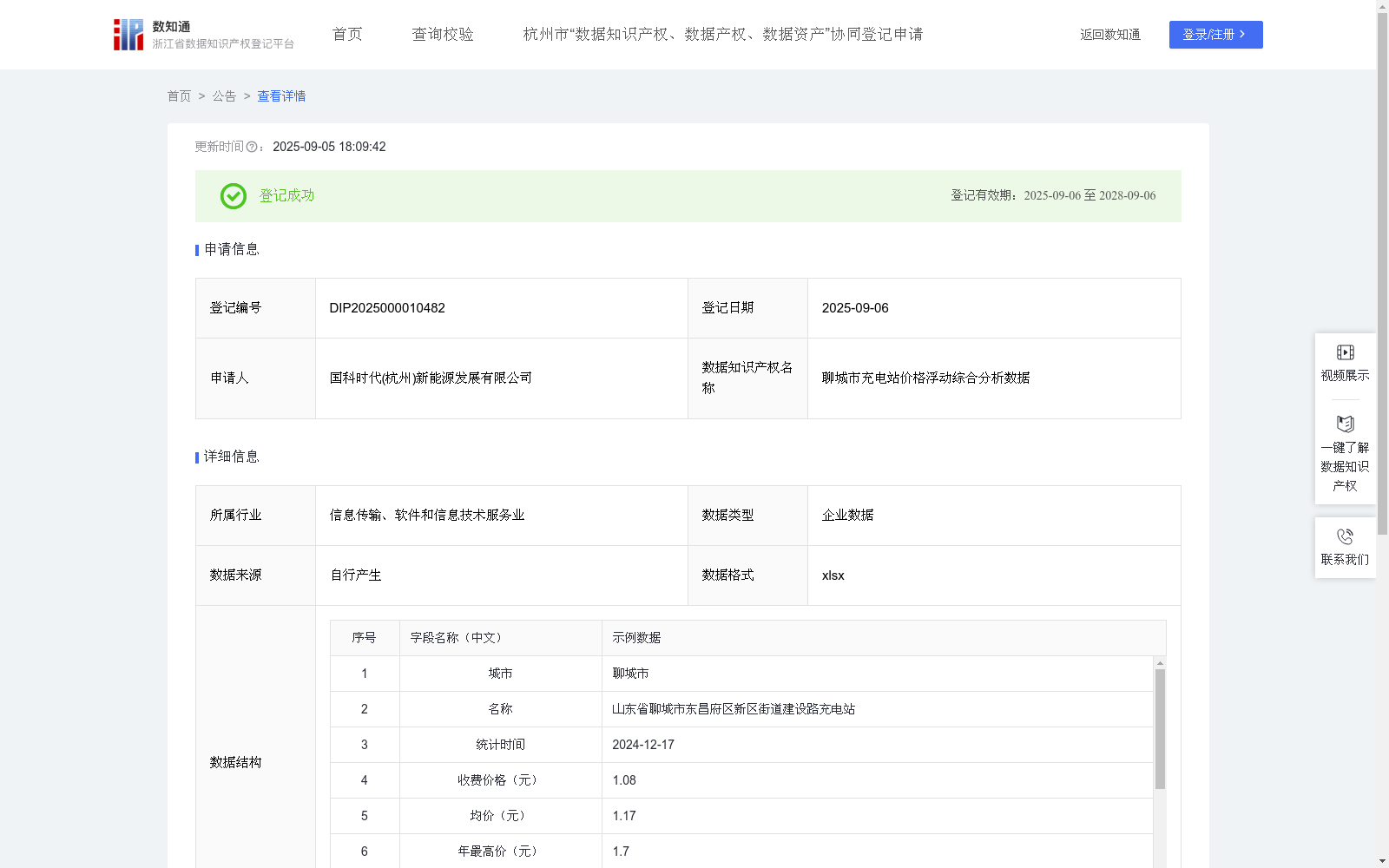
聊城市充电站价格浮动综合分析数据
收藏资源简介:
通过监测充电站价格数据和充电桩实时空闲状态,结合绿色能源供给数据,为车主、运营方、政府提供三层服务: 车主:按 “价格最优、速度最快、绿电优先” 智能推荐充电站,支持即充、预约、错峰充电,兼顾省钱与低碳; 运营方:实时分析价格浮动、桩位占用等数据,动态调整电价和设备运维策略,提升充电桩利用率; 政府:汇总区域充电价格、负荷分布、绿电消纳等数据,辅助政策制定和双碳目标追踪。1、数据采集:从数据库中提取充电站关于充电收费最高价与最低价及充电桩空闲情况:2、处理数据:根据收费价格的平均值得出均价,进一步提取充电站中最高价的峰值与最低价的谷值,该峰值与谷值分别作为该数据的年最高价与年最低价,进一步将(年最高价与充电站电价的差)/充电站电价*100%,从而得出+浮动值,进一步将(年最低价与充电站电价的差)/充电站电价*100%,从而得出-浮动值,进一步根据得出的+浮动值与-浮动值确定均价的浮动区间(-浮动值~+浮动值)。
By monitoring real-time idle status of charging piles and price data of charging stations, combined with green energy supply data, this dataset provides three-layer services for vehicle owners, station operators and the government: For vehicle owners: Intelligently recommend charging stations based on the criteria of "best price, fastest charging speed, prioritize green electricity", support on-site charging, reservation and off-peak charging, balancing cost-saving and low-carbon objectives; For station operators: Conduct real-time analysis on data such as price fluctuations and charging spot occupancy, dynamically adjust charging prices and equipment operation and maintenance strategies to improve the utilization rate of charging piles; For the government: Collect and summarize data such as regional charging prices, load distribution and green energy consumption, to assist policy formulation and tracking of dual-carbon goals; 1. Data Collection: Extract the maximum and minimum charging prices of charging stations and the idle status of charging piles from the database: 2. Data Processing: Calculate the average price based on the collected charging prices. Further extract the peak value of the maximum charging price and the trough value of the minimum charging price of the station, which are respectively taken as the annual maximum price and annual minimum price of this dataset. Then calculate the positive fluctuation value via the formula: (annual maximum price - station's charging price) / station's charging price * 100%, and the negative fluctuation value via: (annual minimum price - station's charging price) / station's charging price * 100%. Finally, determine the fluctuation range of the average price as (negative fluctuation value ~ positive fluctuation value) based on the calculated positive and negative fluctuation values.