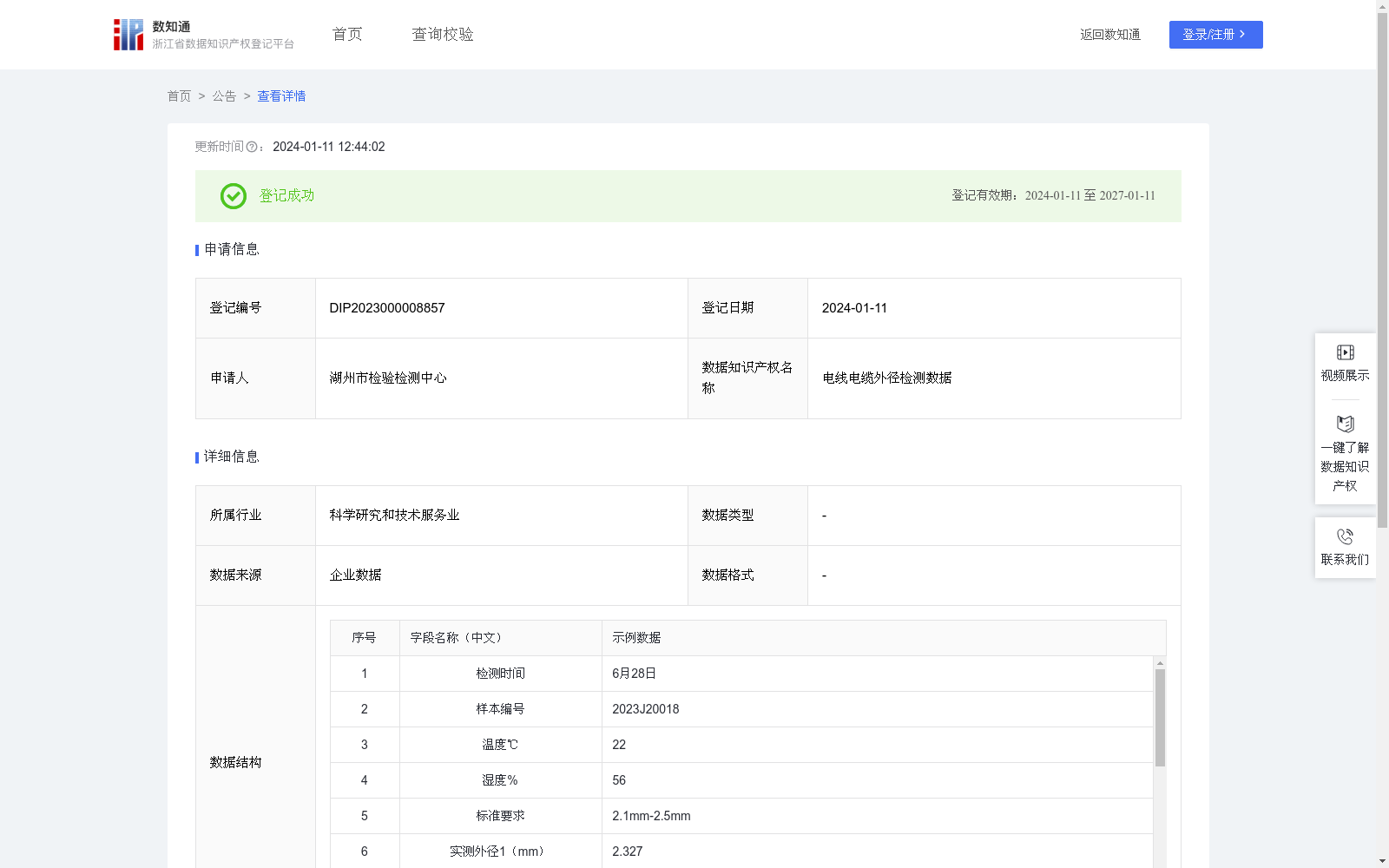
电线电缆外径检测数据
收藏资源简介:
电线电缆的外径大小是判断电线电缆物理性能的一个重要标准,厚度关系到外径的传输效率、传输质量以及寿命等;对电线电缆的外径进行检验检测,可以帮助判断外径大小是否达标;对外径不达标的样品给予提示,为企业产品质量把控提供依据,帮助企业进行技术改进,为政府质量监管和消费者选择提供重要参考。1、数据采集:对样品外径选取六个检测点进行检测,记录实测外径值,2、数据处理:通过对实测数据的加工计算,得出该样品的平均外径,以减小检测误差,平均外径=各实测外径之和/6,以平均外径为最终检测结果,3、将得出的实际平均外径与国家标准进行对比,判断该样品外径是否在标准范围内,计算该批次检测的外径合格率,合格率=合格数量/总数量,判断该批次样本的整体外径情况。4,电线电缆外径可以影响其传输效率、传输质量、寿命等,对每批次电线电缆外径进行检测分析,为政府进行质量监督提供参考,提前减少公共安全隐患,为消费者选择产品提供依据。
The outer diameter of wires and cables is a critical criterion for evaluating their physical properties. The thickness of wires and cables is associated with their transmission efficiency, transmission quality, service life, and other relevant aspects. Inspecting and testing the outer diameter of wires and cables helps determine whether the outer diameter meets the specified standards, and provides alerts for non-compliant samples. This process offers a basis for enterprises to manage product quality, assists enterprises in carrying out technical improvements, and provides important references for government quality supervision and consumer product selection. 1. Data Collection: Select six detection points on the outer diameter of each sample for testing, and record the measured outer diameter values. 2. Data Processing: Calculate the average outer diameter of the sample through processing and calculation of the measured data to reduce detection errors. The formula for the average outer diameter is: Average Outer Diameter = Sum of All Measured Outer Diameter Values / 6. The calculated average outer diameter is taken as the final test result. 3. Standard Comparison and Batch Evaluation: Compare the actual calculated average outer diameter with national standards to determine whether the outer diameter of the sample falls within the standard range. Calculate the qualified rate of outer diameter for this batch of tests, where Qualified Rate = Number of Qualified Samples / Total Number of Samples, so as to judge the overall outer diameter status of this batch of samples. 4. Application Value: The outer diameter of wires and cables can affect their transmission efficiency, transmission quality, service life, and other relevant aspects. Conducting inspection and analysis on the outer diameter of each batch of wires and cables provides references for government quality supervision, reduces potential public safety hazards in advance, and offers a reliable basis for consumers to select products.