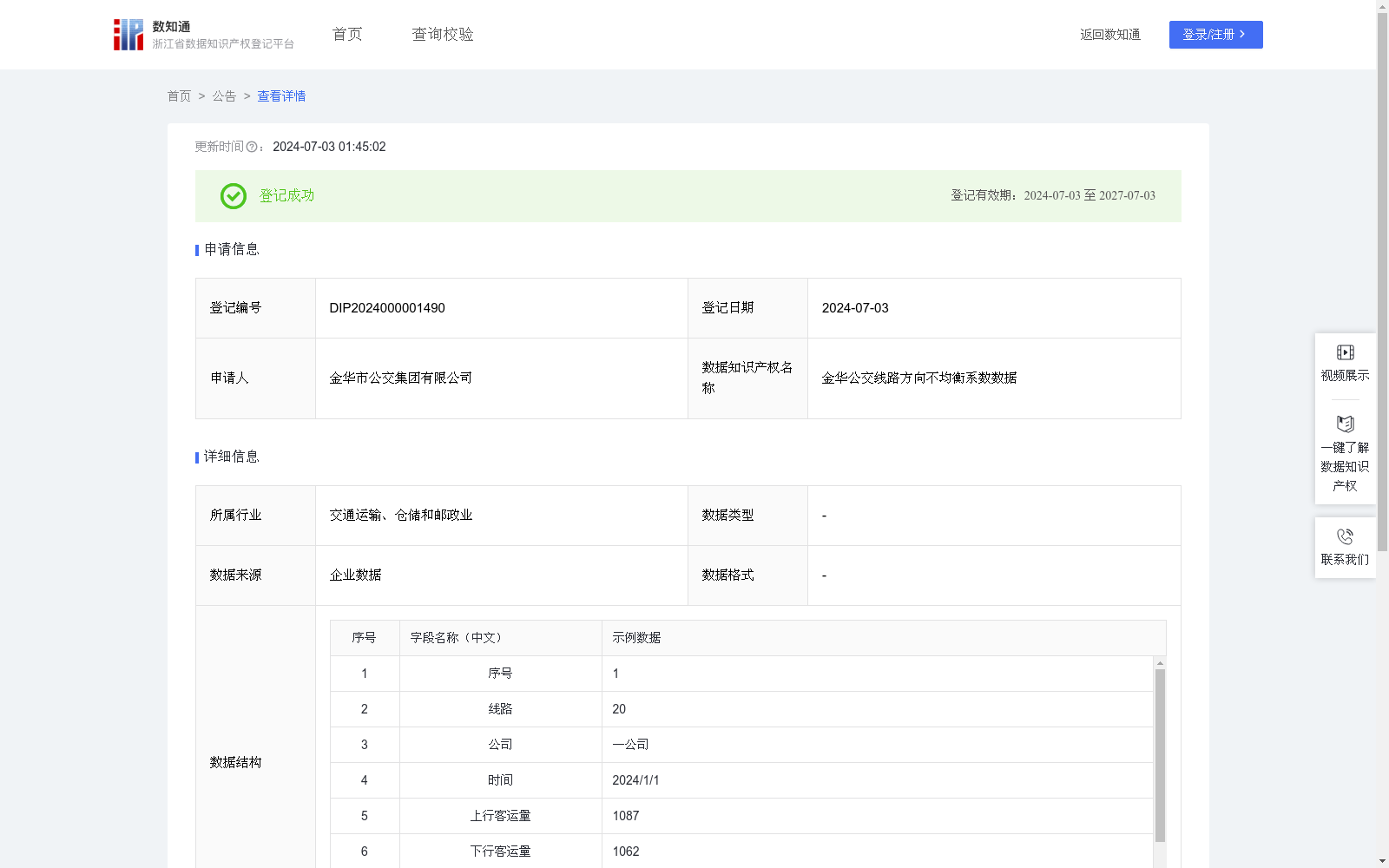
金华公交线路方向不均衡系数数据
收藏资源简介:
方向不均衡系数是一个关键的交通分析指标,它通过比较上行或下行客运量与两者平均值的比例,帮助我们了解交通流量在不同方向上的分布是否均衡。这个指标在交通管理和规划中扮演着重要角色,它不仅可以揭示交通压力较大的方向,为交通改善措施提供依据,还能指导交通资源的合理分配,优化交通路线,提高整体交通效率。1、数据采集:通过线网分析平台,采集每条线路的基本信息,包括所属公司、时间、上行客运量、下行客运量等数据。2、数据处理:清洗数据,确保没有遗漏或错误的记录。3、数据加工:方向不均衡系数=上行或下行客运量与上下行客运量的平均之比。 4、数据应用:利用可视化工具,如图表和地图,直观展示不同线路在不同时间周期下的方向不均衡系数。
The Directional Imbalance Coefficient is a critical traffic analysis indicator. By comparing the upbound or downbound passenger volume with the average of the two directions, it helps assess whether traffic flow is evenly distributed across different directions. This indicator plays a vital role in traffic management and planning: it not only identifies directions with elevated traffic pressure to provide a basis for traffic improvement measures, but also guides the rational allocation of transportation resources, optimizes traffic routes, and enhances overall traffic efficiency. 1. Data Collection: Basic information of each transit line is collected via the network analysis platform, including the affiliated company, time, upbound passenger volume, downbound passenger volume and other relevant data. 2. Data Cleansing: Remove missing or erroneous records to ensure data integrity and accuracy. 3. Data Calculation: The Directional Imbalance Coefficient is calculated as the ratio of either the upbound or downbound passenger volume to the average of the upbound and downbound passenger volumes. 4. Data Application: Utilize visualization tools such as charts and maps to intuitively demonstrate the Directional Imbalance Coefficient of different transit lines across various time periods.