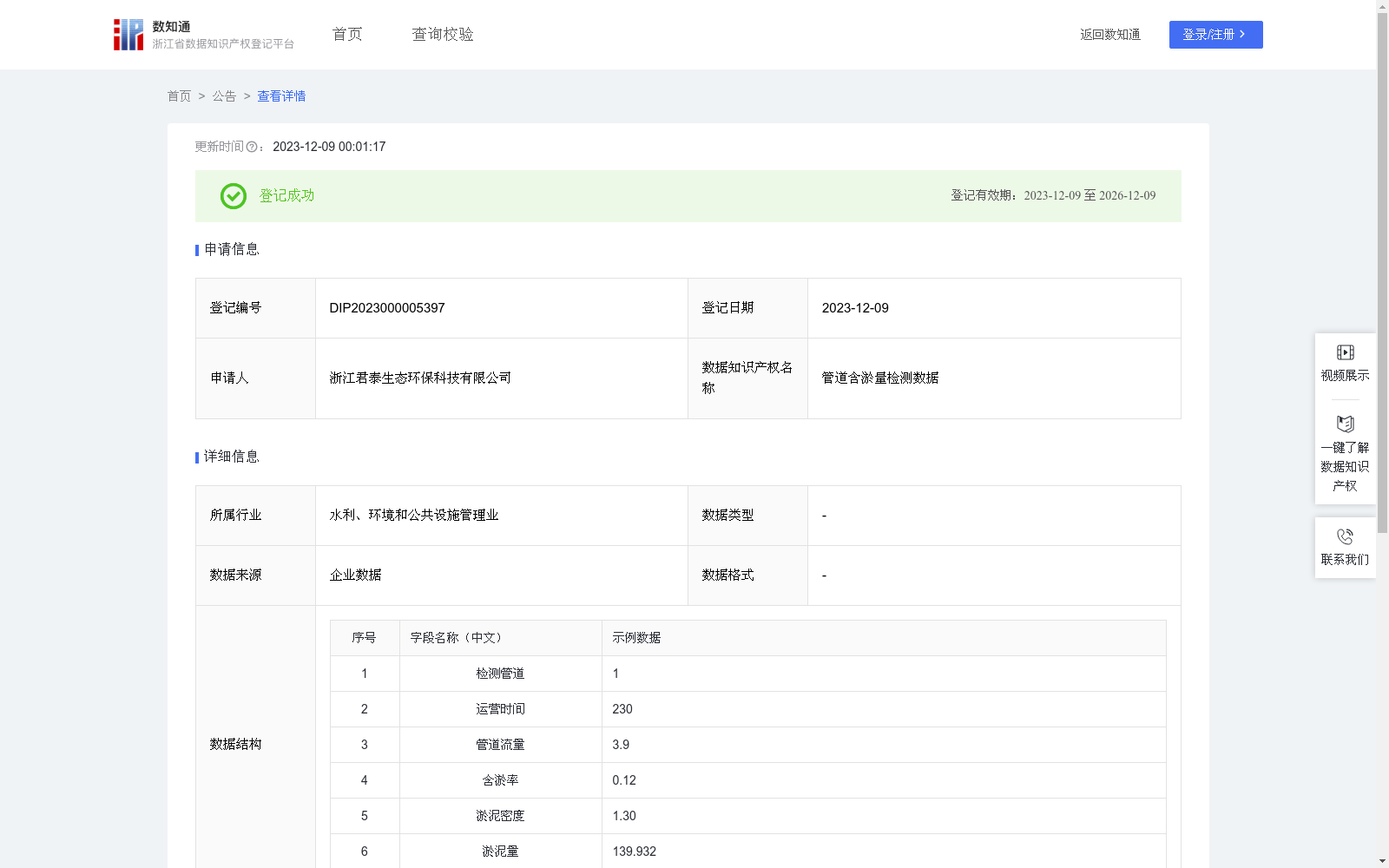
管道含淤量检测数据
收藏资源简介:
通过物联网传感器实时监控观测点的数据,了解管道中的含淤量变化趋势和异常情况,并对管道淤泥进行监测,为清淤工程提供强有力的数据支持,有助于保护市政、企业等各类管道保护,预防淤泥堆积造成污染,有利于城市的可持续发展。根据管道的流量和运营时间计算:淤泥量=管道流量×管道内在含淤率×运营时间×淤泥密度 1. 数据收集与整理:利用物联网传感器实时收集管道淤泥量数据以及相关变量数据,包括管道流量、管道内在含淤率、运营时间、淤泥密度等。随后,对所获数据进行清洗、处理和整理,处理缺失值和异常值等。 2. 根据数据计算公式:淤泥量=管道流量×管道内在含淤率×运营时间×淤泥密度 3. 数据应用:运用所建立的淤泥量数据模型,预测和分析未来一段时间内管道内的淤泥量数据变化。 综上所述,通过以上流程,我们能够建立可靠的统计学模型,用于预测管道内的淤泥量数据。这将为市政、企业等各类管道进行积极预防,有利于城市的可持续发展。
Real-time monitoring of data at monitoring points via IoT sensors is conducted to track the changing trends and abnormal conditions of sediment accumulation in pipelines and monitor pipeline sludge, providing robust data support for dredging projects. This work helps protect various pipelines including municipal and corporate ones, prevents pollution caused by sediment accumulation, and promotes urban sustainable development. The sediment volume is calculated based on pipeline flow rate and operating time using the following formula: Sediment Volume = Pipeline Flow Rate × Intrinsic Sediment Content Rate of Pipeline × Operating Time × Sludge Density 1. Data Collection and Organization: IoT sensors are utilized to collect real-time data on pipeline sludge volume and related variables, including pipeline flow rate, intrinsic sediment content rate of the pipeline, operating time, and sludge density. Subsequently, the collected data is cleaned, processed and organized, with missing values and outliers properly handled. 2. Calculation based on the data formula: Sediment Volume = Pipeline Flow Rate × Intrinsic Sediment Content Rate of Pipeline × Operating Time × Sludge Density 3. Data Application: The established sediment volume prediction model is applied to forecast and analyze the changes in pipeline sediment volume over a forthcoming period. In summary, a reliable statistical model for pipeline sediment volume prediction can be established via the above workflow. This will enable proactive prevention for various pipelines including municipal and corporate ones, and support urban sustainable development.