两种碳含量Q-P马氏体钢冲击磨损行为研究
收藏资源简介:
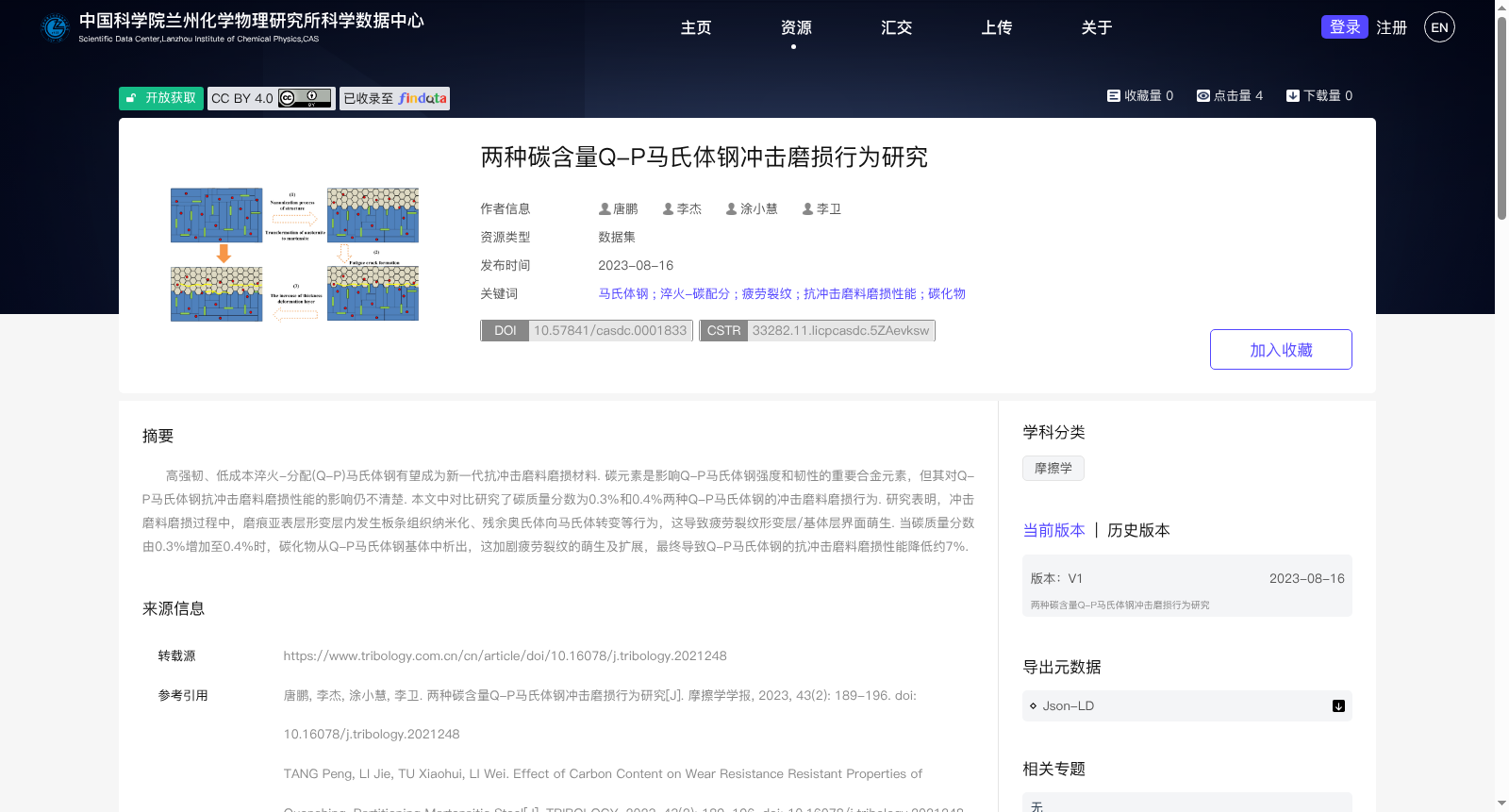
高强韧、低成本淬火-分配(Q-P)马氏体钢有望成为新一代抗冲击磨料磨损材料. 碳元素是影响Q-P马氏体钢强度和韧性的重要合金元素,但其对Q-P马氏体钢抗冲击磨料磨损性能的影响仍不清楚. 本文中对比研究了碳质量分数为0.3%和0.4%两种Q-P马氏体钢的冲击磨料磨损行为. 研究表明,冲击磨料磨损过程中,磨痕亚表层形变层内发生板条组织纳米化、残余奥氏体向马氏体转变等行为,这导致疲劳裂纹形变层/基体层界面萌生. 当碳质量分数由0.3%增加至0.4%时,碳化物从Q-P马氏体钢基体中析出,这加剧疲劳裂纹的萌生及扩展,最终导致Q-P马氏体钢的抗冲击磨料磨损性能降低约7%.
High-strength and high-toughness, low-cost quenching-partitioning (Q-P) martensitic steels hold great promise as a new generation of impact-abrasive wear-resistant materials. Carbon is an important alloying element that affects the strength and toughness of Q-P martensitic steels, yet its influence on the impact-abrasive wear resistance of these steels remains unclear. In this study, the impact-abrasive wear behaviors of two Q-P martensitic steels with carbon mass fractions of 0.3% and 0.4% were comparatively investigated. The results show that during impact-abrasive wear, processes such as the nano-crystallization of lath microstructures and the transformation of retained austenite to martensite occur in the subsurface deformation layer of wear scars, which leads to the initiation of fatigue cracks at the deformation layer/matrix layer interface. When the carbon mass fraction increases from 0.3% to 0.4%, carbides precipitate from the matrix of Q-P martensitic steels, which exacerbates the initiation and propagation of fatigue cracks, ultimately reducing the impact-abrasive wear resistance of the Q-P martensitic steels by approximately 7%.