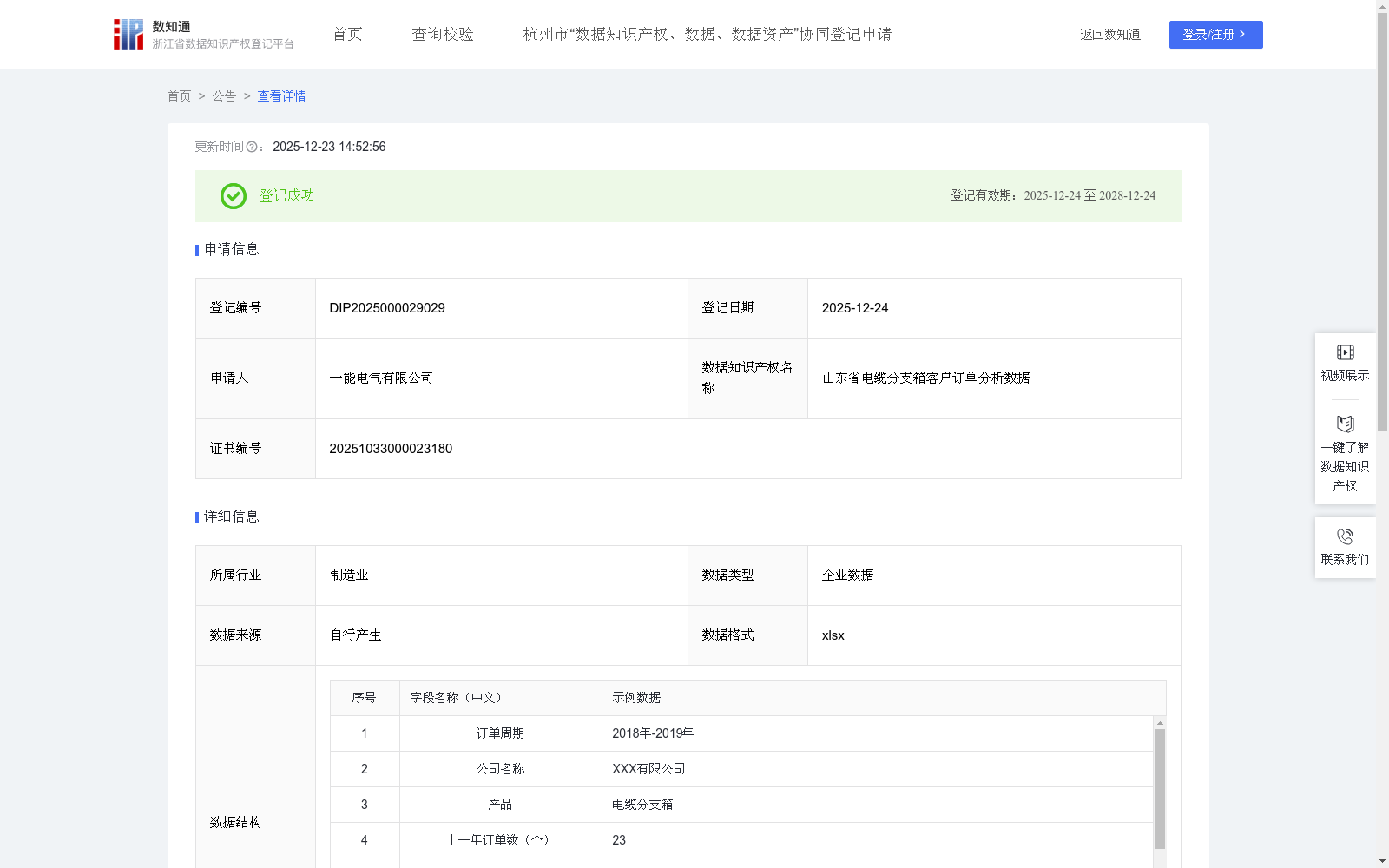
山东省电缆分支箱客户订单分析数据
收藏资源简介:
通过订单数据分析,企业可实现客户的精准分层与运营优化。基于数据特征,客户可划分为四个层级,并匹配差异化策略:核心客户:提供优先排产与服务、配置专属对接,深度锁定长期合作关系;潜力客户:推送 “批量采购优惠” 政策,助力其提升采购规模,向核心客户转化;基础客户:定期传递产品升级信息,引导其增加复购频次,提升单客价值;待观察客户:通过小批量低价产品激活需求,挖掘后续合作潜力。基于该分层制定的运营策略,不仅可提升客户管理效率,更能强化客户粘性,为企业带来长期收益。通过采集公司历年的电缆分支箱的订单数据,通过以下五个指标及权重对客户进行打分,通过 “指标加权得分法” 划分客户等级。具体流程为:先为各指标设定权重,再依据量化结果进行打分,最终根据总分确定客户级别, 总订单数(上一年订单数+下一年订单数):100分≥20个);80分<20个≥15个;60分<15个≥10个;40分<10个≥5个;20分:<5个; 次年订单比(下一年订单数/上一年订单数):100 分:≥80%;80 分:≥60% <80%;60 分:≥40% <60%;40 分:≥20% <40%;20 分:<20%; 次年订单数量波动幅度(丨下一年订单数-上一年订单数/上一年订单数丨):100分:≤20%;80 分:>20%≤30%;60 分:>30%≤40%;40 分:>40%≤50%;20 分:>50%; 订单成交率(总订单成交数/总订单数):100 分:100% ;80 分:≥90%<100%;60 分:≥80%<90%;40 分:70≥%<80%;20 分:<70% 订单增长率(下一年订单数 - 上一年订单数)/ 上一年订单数:100 分:增长率≥20%;80 分:≥10%<20%;60 分:≥0%<10%;40 分:≥-10%<0%;20 分:<-10% 其中总订单数占权重40%;次年订单比占权重20%;次年订单数量波动幅度占权重20%;订单成交率占权重10%;订单增长率占权重10%,数据中出现的百分比数值四舍五入取整数,最终根据总分对客户进行评级:核心客户(总分≥85 分);潜力客户(70 分≤总分<85 分);基础客户(60 分≤总分<70 分);待观察客户(总分<60 分)。
By analyzing order data, enterprises can achieve precise customer segmentation and operational optimization. Based on data characteristics, customers can be divided into four tiers with matching differentiated strategies: 1. Core Customers: Provide priority production scheduling and services, assign exclusive docking personnel, and deeply lock long-term cooperative relationships; 2. Potential Customers: Promote the "bulk purchase discount" policy to help them expand their purchase scale and convert into core customers; 3. Basic Customers: Regularly deliver product upgrade information to guide them to increase repurchase frequency and improve per-customer value; 4. Customers to be Observed: Activate demand through small-batch low-price products to explore potential follow-up cooperation. The operational strategies formulated based on this segmentation can not only improve customer management efficiency, but also strengthen customer stickiness and bring long-term benefits to enterprises. By collecting the company's annual order data of cable branch boxes, customers are scored using the following five indicators and their corresponding weights, and customer levels are divided through the "index weighted scoring method". The specific process is as follows: first set the weights for each indicator, then score based on the quantified results, and finally determine the customer level based on the total score. - Total Order Count (Previous Year Order Count + Next Year Order Count): 100 points for ≥20 orders; 80 points for 15 ≤ orders <20; 60 points for 10 ≤ orders <15; 40 points for 5 ≤ orders <10; 20 points for <5 orders; - Next Year Order Ratio (Next Year Order Count / Previous Year Order Count): 100 points for ≥80%; 80 points for 60% ≤ ratio <80%; 60 points for 40% ≤ ratio <60%; 40 points for 20% ≤ ratio <40%; 20 points for <20%; - Next Year Order Quantity Fluctuation Range (|(Next Year Order Count - Previous Year Order Count) / Previous Year Order Count|): 100 points for ≤20%; 80 points for 20% < fluctuation ≤30%; 60 points for 30% < fluctuation ≤40%; 40 points for 40% < fluctuation ≤50%; 20 points for >50%; - Order Transaction Rate (Total Transaction Orders / Total Order Count): 100 points for 100%; 80 points for 90% ≤ rate <100%; 60 points for 80% ≤ rate <90%; 40 points for 70% ≤ rate <80%; 20 points for <70%; - Order Growth Rate ((Next Year Order Count - Previous Year Order Count) / Previous Year Order Count): 100 points for growth rate ≥20%; 80 points for 10% ≤ growth rate <20%; 60 points for 0% ≤ growth rate <10%; 40 points for -10% ≤ growth rate <0%; 20 points for growth rate < -10%; Among them, total order count accounts for 40% of the weight; next year order ratio accounts for 20%; next year order quantity fluctuation range accounts for 20%; order transaction rate accounts for 10%; order growth rate accounts for 10%. All percentage values in the data are rounded to integers. Finally, customers are rated based on their total score: Core Customers (total score ≥85); Potential Customers (70 ≤ total score <85); Basic Customers (60 ≤ total score <70); Customers to be Observed (total score <60).