
Honey bee introductions displace native bees and decrease pollination of a native wildflower
收藏Mendeley Data2024-03-27 更新2024-06-27 收录
下载链接:
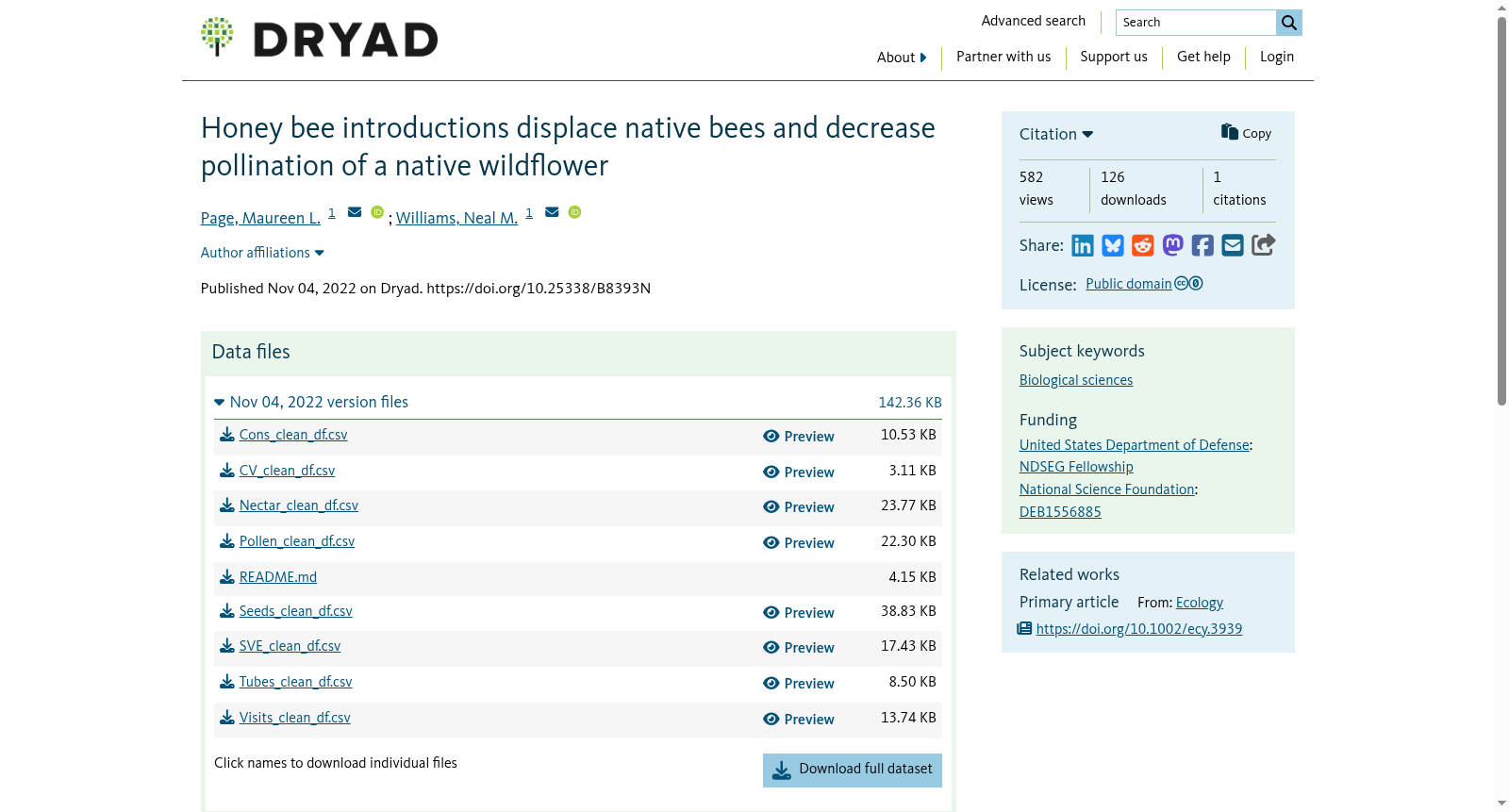
https://datadryad.org/stash/dataset/doi:10.25338/B8393N
下载链接
链接失效反馈官方服务:
资源简介:
Introduced species can have cascading effects on ecological communities, but indirect effects of species introductions are rarely the focus of ecological studies. For example, managed honey bees (Apis mellifera) have been widely introduced outside their native range and are increasingly dominant floral visitors. Multiple studies have documented how honey bees impact native bee communities through floral resource competition, but few have quantified how these competitive interactions indirectly affect pollination and plant reproduction. Such indirect effects are hard to detect because honey bees are themselves pollinators and may directly impact pollination through their own floral visits. The potentially huge but poorly understood impacts that non-native honey bees have on native plant populations combined with increased pressure from beekeepers to place hives in U.S. National Parks and Forests makes exploring the impacts of honey bee introductions on native plant pollination of pressing concern. In this study, we used experimental hive additions, field observations, as well as single-visit and multiple-visit pollination effectiveness trials across multiple years to untangle the direct and indirect impacts of increasing honey bee abundance on the pollination of an ecologically important wildflower, Camassia quamash. We found compelling evidence that honey bee introductions indirectly decrease pollination by reducing nectar and pollen availability and competitively excluding visits from more effective native bees. In contrast, the direct impact of honey bee visits on pollination was negligible, and, if anything, negative. Honey bees were ineffective pollinators and increasing visit quantity could not compensate for inferior visit quality. Indeed, although the effect was not statistically significant, increased honey bee visits had a marginally negative impact on seed production. Thus, honey bee introductions may erode longstanding plant-pollinator mutualisms, with negative consequences for plant reproduction. Our study calls for a more thorough understanding of the indirect effects of species introductions and more careful coordination of hive placements.
外来物种可对生态群落产生级联效应,但物种引入的间接效应却极少成为生态学研究的核心议题。例如,养殖西方蜜蜂(Apis mellifera)已被广泛引入其原生分布范围之外,且正日益成为占优势的访花类群。多项研究已探明西方蜜蜂如何通过花资源竞争影响本土蜂类群落,但鲜有研究量化这类竞争互动如何间接影响传粉过程与植物繁殖。这类间接效应往往难以被检测,因为西方蜜蜂本身即为传粉者,可通过自身的访花行为直接影响传粉过程。非本土西方蜜蜂对本土植物种群的潜在巨大影响迄今仍未被充分认知,加之养蜂者愈发倾向于在美国国家公园及森林公园布设蜂箱,使得探究西方蜜蜂引入对本土植物传粉的影响成为亟需关注的议题。本研究通过多年的蜂箱布设实验、野外观测以及单次访花与多次访花传粉有效性试验,厘清了西方蜜蜂种群密度增加对生态重要性野生植物卡马夏百合(Camassia quamash)传粉过程的直接与间接影响。本研究发现了确凿证据:西方蜜蜂的引入可通过降低花蜜与花粉可获得性,以及竞争性排除传粉效率更高的本土蜂类的访花行为,间接削弱传粉效果。与之相对,西方蜜蜂的访花行为对传粉的直接影响可忽略不计,甚至若有影响的话,实则为负面。西方蜜蜂并非高效的传粉者,其访花频次的增加无法弥补其传粉质量的不足。实际上,尽管该效应未达到统计学显著性水平,但西方蜜蜂访花频次的增加仍对种子生产产生了微弱的负面影响。因此,西方蜜蜂的引入可能会破坏长期演化形成的植物-传粉者互利共生关系,进而对植物繁殖产生负面影响。本研究呼吁学界进一步深入认知物种引入的间接效应,并对蜂箱布设进行更为审慎的统筹协调。
创建时间:
2023-06-28
搜集汇总
数据集介绍
背景与挑战
背景概述
该数据集研究了引入的蜜蜂(Apis mellifera)对本地蜜蜂和野花(Camassia quamash)授粉的生态影响。通过野外实验和观测,发现蜜蜂引入会竞争性地减少花蜜和花粉资源,排挤更有效的本地蜜蜂,从而间接降低授粉效果;而蜜蜂自身的直接授粉贡献很小,甚至可能对种子生产产生负面影响。数据集包含多份CSV文件,记录了蜜蜂和本地蜜蜂的访花行为、花粉可用性、种子产量等数据,支持生态学和保护生物学研究。
以上内容由遇见数据集搜集并总结生成


