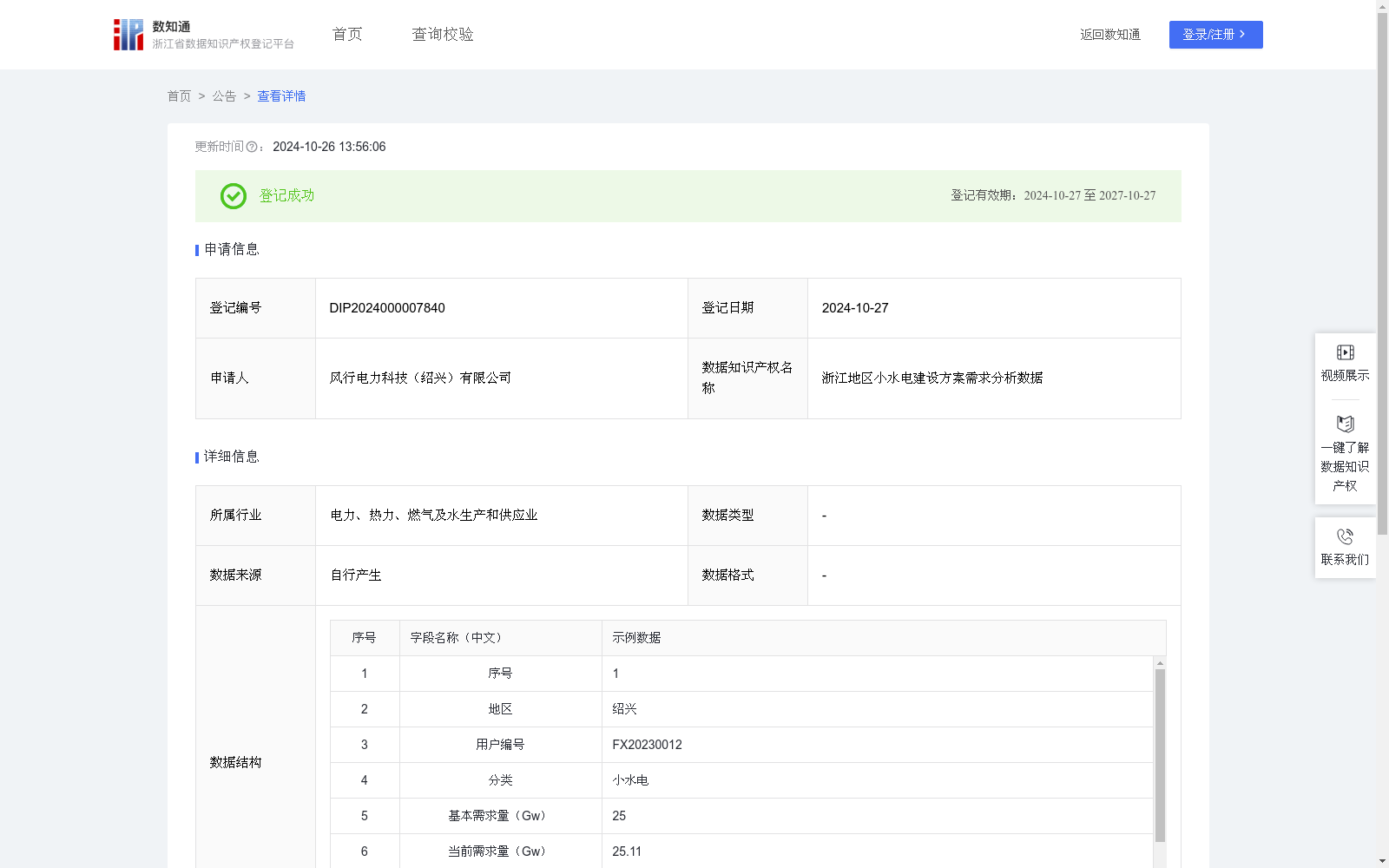
浙江地区小水电建设方案需求分析数据
收藏资源简介:
优化能源结构,提高清洁能源比例,成为浙江地区的迫切需求。分布式能源系统以其清洁、高效的特点,能够有效减少污染物排放,改善空气质量。分布式能源系统可以就近满足用户需求,提高供电安全性和可靠性。浙江省作为东部沿海经济发达省份,面临着节能减排和绿色发展的双重压力,进行需求分析可以明确浙江地区在节能减排和绿色发展方面的具体需求,为推广分布式能源解决方案提供有针对性的建议和支持。1.数据采集:采集绍兴地区各用户小水电能源需求量的相关数据。2.数据处理:对采集到数据进行分类、合并、累加,便于分析使用。3.算法加工:将处理后的数据进行需求量分析:P=当前需求量/基本需求量-1,标准值为0。4、数据分类分级:根据计算出的需求量水平,判断需求的上升和下降(≥0以上标记为“需求增加”,<0标记为“需求减少”),帮助公司和相关行业同行更好地理解地区能源需求,可根据地方数据进行统计等级安排定期交流访谈,从而制定更精准的能源装机策略。
Optimizing the energy structure and increasing the proportion of clean energy has become an urgent need in Zhejiang Province. Distributed energy systems, characterized by cleanliness and high efficiency, can effectively reduce pollutant emissions and improve air quality. They can meet user demands locally, enhancing the safety and reliability of power supply. As an economically developed eastern coastal province, Zhejiang faces dual pressures of energy conservation, emission reduction, and green development. Conducting demand analysis can clarify the specific needs of Zhejiang in terms of energy conservation, emission reduction and green development, providing targeted recommendations and support for the promotion of distributed energy solutions. 1. Data Collection: Collect relevant data on the energy demand of small hydropower users across the Shaoxing area. 2. Data Processing: Classify, merge and aggregate the collected data to facilitate analytical work. 3. Algorithm Processing: Conduct demand analysis on the processed data using the formula P = (Current Demand / Basic Demand) - 1, with a standard value of 0. 4. Data Classification and Grading: Judge the increase or decrease of energy demand based on the calculated demand level, mark as "Demand Increase" when the value is ≥0, and "Demand Decrease" when the value is <0. This will help enterprises and relevant industry peers better understand regional energy demands, and they can arrange regular communication and interviews based on local data statistics to formulate more precise energy installation strategies.