基于ARCHARD磨损模型的WR-CVT非连续接触钢丝绳磨损研究
收藏资源简介:
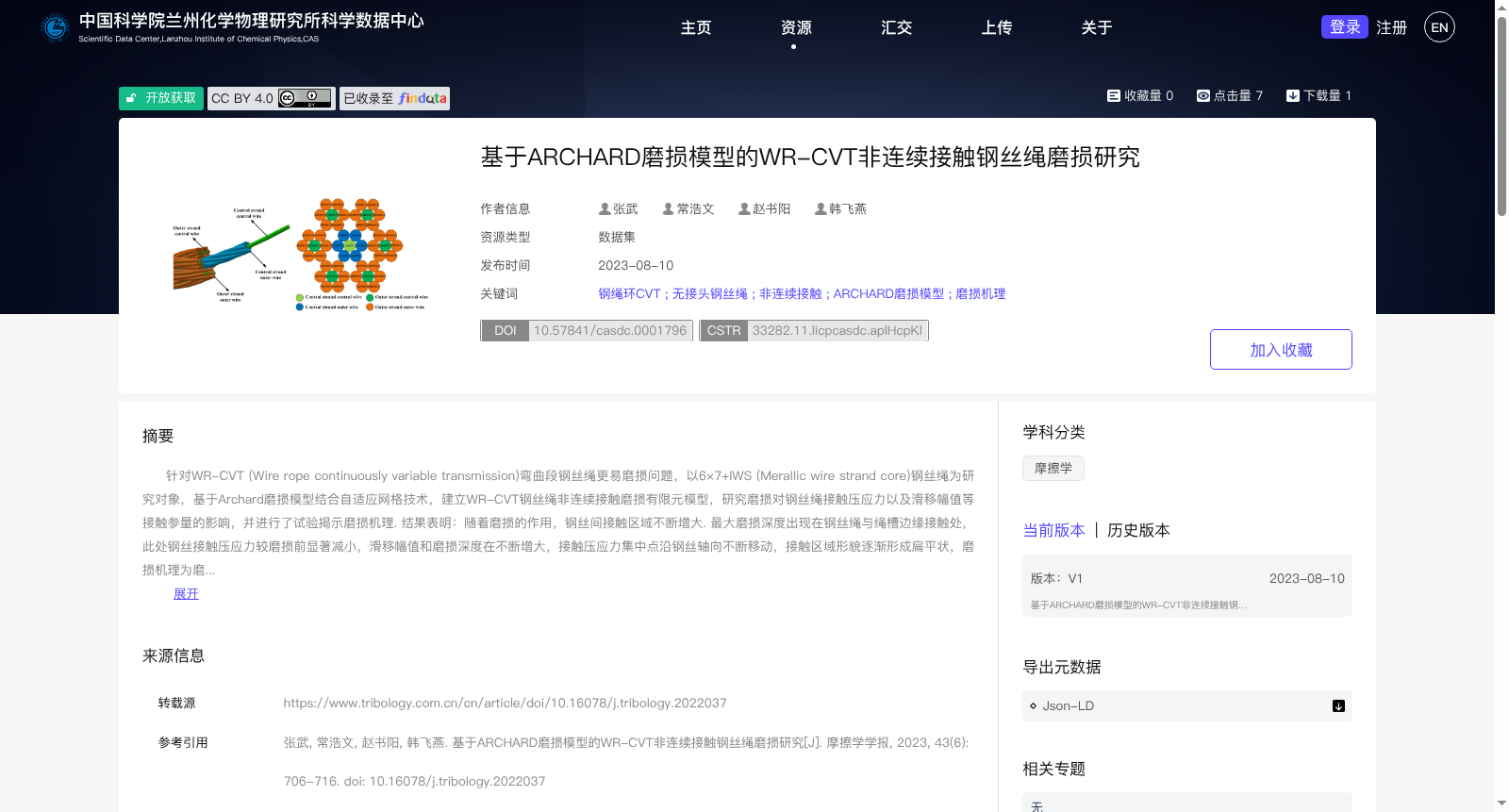
针对WR-CVT (Wire rope continuously variable transmission)弯曲段钢丝绳更易磨损问题,以6×7+IWS (Merallic wire strand core)钢丝绳为研究对象,基于Archard磨损模型结合自适应网格技术,建立WR-CVT钢丝绳非连续接触磨损有限元模型,研究磨损对钢丝绳接触压应力以及滑移幅值等接触参量的影响,并进行了试验揭示磨损机理. 结果表明:随着磨损的作用,钢丝间接触区域不断增大. 最大磨损深度出现在钢丝绳与绳槽边缘接触处,此处钢丝接触压应力较磨损前显著减小,滑移幅值和磨损深度在不断增大,接触压应力集中点沿钢丝轴向不断移动,接触区域形貌逐渐形成扁平状,磨损机理为磨粒磨损、黏着磨损和疲劳磨损.
Aiming at the issue that wire ropes in the curved segment of WR-CVT (Wire Rope Continuously Variable Transmission) are more susceptible to wear, this study takes 6×7+IWS (Metallic wire strand core) wire ropes as the research subject. A discontinuous contact wear finite element model of WR-CVT wire ropes is established based on the Archard wear model combined with adaptive meshing technology. The impacts of wear on contact parameters including contact compressive stress and sliding amplitude of the wire ropes are investigated, and experiments are carried out to reveal the wear mechanism. The results demonstrate that: with the progression of wear, the contact area between adjacent wires continues to expand. The maximum wear depth appears at the contact position between the wire rope and the edge of the sheave groove, where the contact compressive stress of the wires is notably reduced compared to the pre-wear state, while the sliding amplitude and wear depth keep increasing. The contact compressive stress concentration points shift continuously along the axial direction of the wires, the morphology of the contact area gradually develops into a flat shape, and the wear mechanisms are abrasive wear, adhesive wear and fatigue wear.