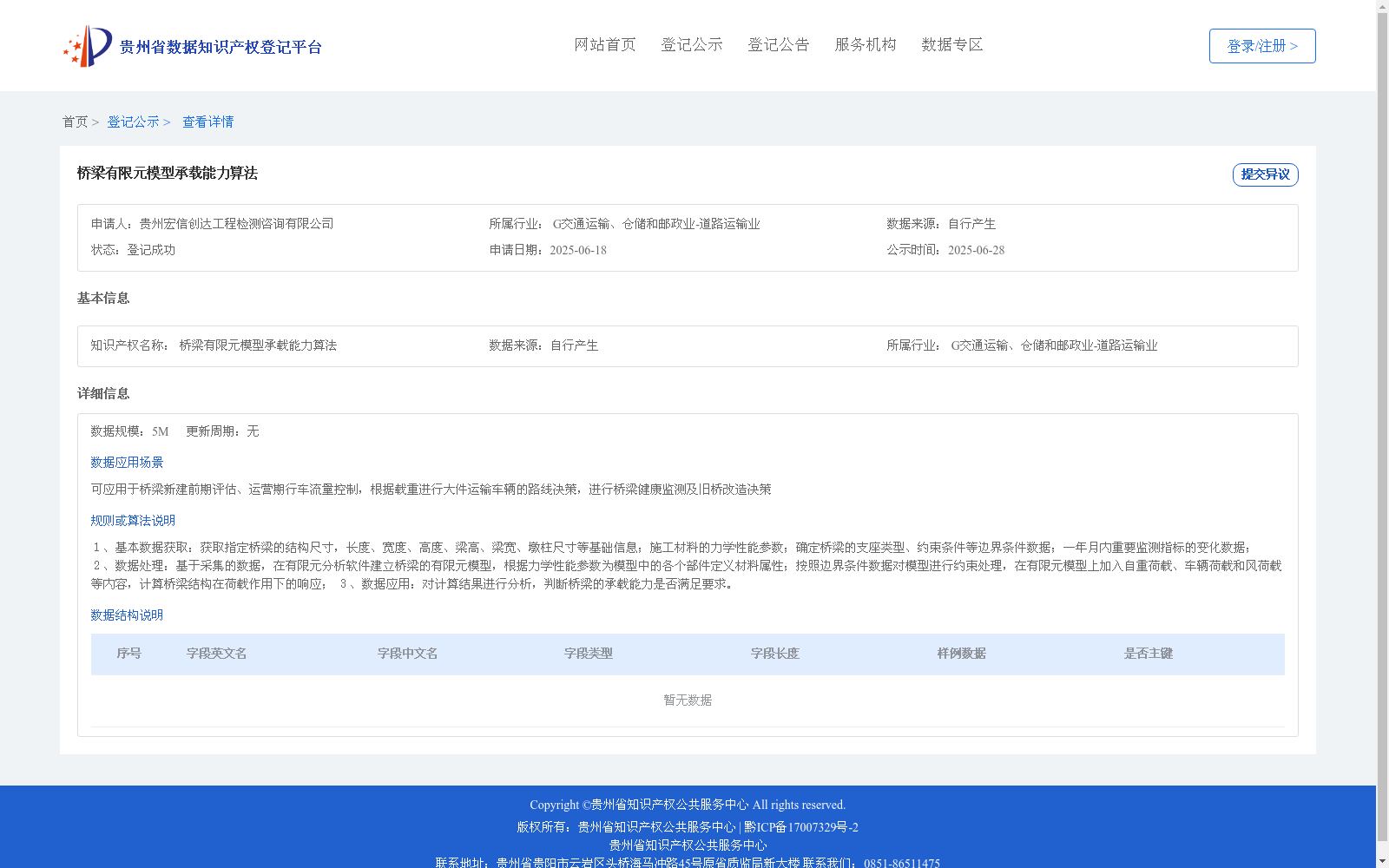
桥梁有限元模型承载能力算法
收藏资源简介:
1、基本数据获取:获取指定桥梁的结构尺寸,长度、宽度、高度、梁高、梁宽、墩柱尺寸等基础信息;施工材料的力学性能参数;确定桥梁的支座类型、约束条件等边界条件数据;一年月内重要监测指标的变化数据; 2、数据处理:基于采集的数据,在有限元分析软件建立桥梁的有限元模型,根据力学性能参数为模型中的各个部件定义材料属性;按照边界条件数据对模型进行约束处理,在有限元模型上加入自重荷载、车辆荷载和风荷载等内容,计算桥梁结构在荷载作用下的响应; 3、数据应用:对计算结果进行分析,判断桥梁的承载能力是否满足要求。
1. Basic Data Acquisition: Obtain basic information of the specified bridge, including its structural dimensions (length, width, height, girder height, girder width, pier column dimensions, etc.); mechanical property parameters of construction materials; boundary condition data such as the bearing type and constraint conditions of the bridge; and change data of important monitoring indicators within a one-year period. 2. Data Processing: Based on the collected data, establish a finite element model of the bridge in finite element analysis software, define material properties for each component in the model according to the mechanical property parameters; perform constraint setup on the model based on the boundary condition data, apply dead load, vehicle load, wind load and other loads to the finite element model, and calculate the response of the bridge structure under these loads. 3. Data Application: Analyze the calculation results to determine whether the bearing capacity of the bridge meets the requirements.